
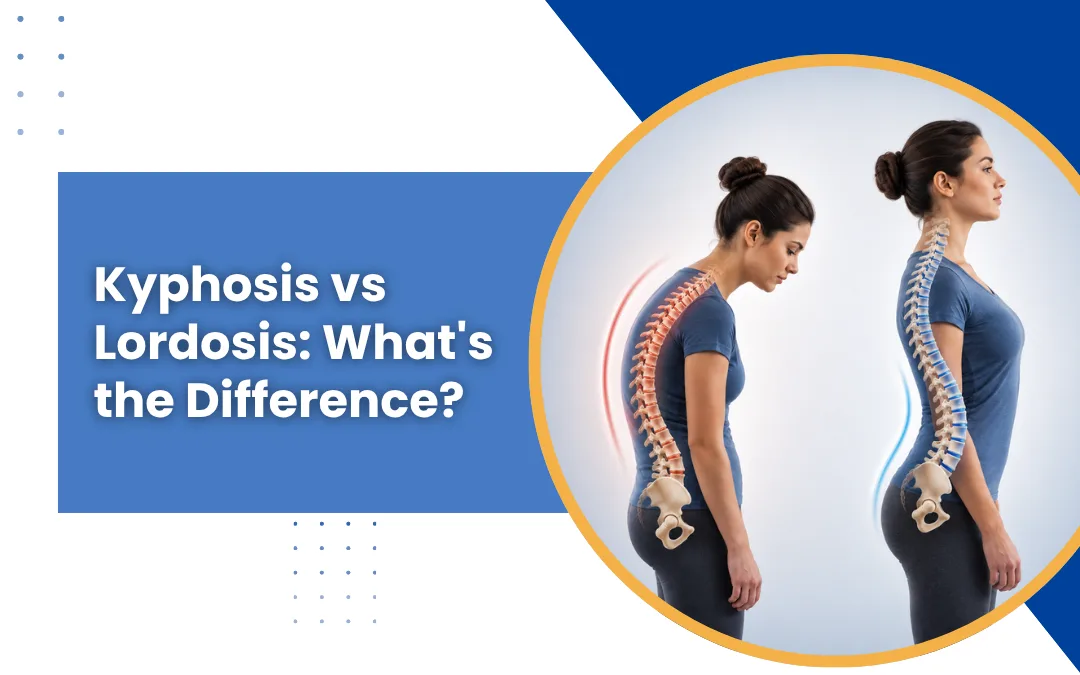
Kyphosis and lordosis curve the spine in opposite directions. Kyphosis rounds the upper back outward. Lordosis does the reverse, pulling the lower back, and sometimes the neck, inward. Different regions, different causes, and often different patients too. A physical exam confirmed with imaging is what actually distinguishes the two, and that finding decides what treatment looks like from there.
According to Dr. Naveen Tahasildar, an expert Spine Surgeon in Bangalore, “A curve on its own doesn’t tell you much. What matters is the direction it’s going, and that’s what determines the treatment path.”
What Are The Key Differences Between Kyphosis And Lordosis?
Direction and location. That’s really what separates these two conditions.
Spinal Curve: Kyphosis rounds outward. Lordosis pulls inward. It’s the first thing checked because it tells you almost everything else about which condition you’re looking at.
Affected Region: Thoracic spine for kyphosis, lumbar for lordosis, though the neck can be involved too, just less often.
Common Causes: Poor posture, osteoporosis, and disc degeneration usually sit behind kyphosis. Lordosis tends to trace back to extra weight around the midsection, tight hip flexors, or a slipped vertebra.
Visible Signs: A hunched, rounded upper back signals kyphosis. An exaggerated inward arch at the lower back, sometimes with the stomach pushed forward, signals lordosis instead.
Both curves can overlap with other degenerative changes, so patients with ongoing stiffness alongside either condition sometimes need spondylosis treatment added to the plan.
How Are Kyphosis And Lordosis Treated?
Severity, age, and whether the curve is still progressing, these three factors drive the treatment decision.
Physical Therapy: Stretching and strengthening support the muscles holding the spine in place. Progress builds slowly, usually over months rather than weeks.
Bracing: Kids and teens with a curve that’s still progressing sometimes get a brace while the spine is still growing, since that window is when bracing actually works.
Posture Training: Better ergonomics, more core strength. Neither is dramatic on its own, but together they take real pressure off the spine day to day.
Surgical Correction: A rigid curve that limits breathing or keeps advancing despite everything else tried is usually what pushes a patient toward surgery.
Anyone unsure whether a posture change needs a closer look can start with this related article on signs that warrant a specialist visit.
Why Choose Dr. Naveen Tahasildar?
Dr. Naveen Tahasildar completed his MBBS and MS in Orthopaedics at PGIMER Chandigarh, then an AO Spine Fellowship, followed by further orthopaedic training at Epworth Hospitals, Melbourne. He brings over 18 years of experience and has performed more than 3,000 procedures. His practice leans on minimally invasive spine surgery, reserving it for patients who genuinely need it.
Patients who stay consistent with a structured non-surgical plan for postural or degenerative curvature usually see real improvement in alignment and pain within a few months. It’s not a fast process. But it’s a steady one, and that’s really the point.
Call +91 7676090119 to book your consultation.
Noticed a visible curve or posture change in your back or neck?
FAQs
Can kyphosis and lordosis occur together?
Yes, some patients have both curves affecting different regions of the spine.
Is lordosis always a medical problem?
No, a mild natural lordotic curve is normal and healthy.
Can kyphosis be corrected without surgery?
Most mild to moderate kyphosis improves with therapy, bracing, and posture correction.
Does poor posture cause permanent spinal curvature?
Prolonged poor posture can worsen curvature, though early correction often helps significantly.
Disclaimer
This blog is for informational and educational purposes only and is not a substitute for professional medical advice. Always consult a qualified spine specialist for diagnosis and treatment.