
Kyphoplasty Treatment in Bangalore
Kyphoplasty is a minimally invasive spine surgery procedure that treats painful vertebral compression fractures caused by osteoporosis, spinal tumours, or trauma. A small balloon is inserted into the collapsed vertebra to restore its height, and bone cement is injected to stabilize it. Pain relief is usually immediate, and most patients walk the same day.
According to Dr. Naveen Tahasildar, a leading spine surgeon in Bangalore, “Kyphoplasty isn’t just about pain relief. Restoring vertebral height also protects spinal alignment and reduces the risk of further fractures. For most patients, that means walking out of the hospital within 24 hours.”
With 18+ years exclusively in spine surgery and 4,000+ procedures performed, Dr. Tahasildar brings international fellowship training from Aarhus University Hospital, Denmark (SICOT, minimally invasive spine surgery) and Epworth Hospitals, Melbourne (AOA-accredited) directly to patients in Bangalore. His approach to kyphoplasty combines precise imaging-guided technique with same-day mobilisation. That’s why patients return to normal life within days, not weeks.
What Is Kyphoplasty?
Kyphoplasty is a vertebral augmentation procedure designed to treat painful compression fractures of the spine. It’s performed through two tiny incisions, usually under local anaesthesia with light sedation, and takes around 45 to 60 minutes per level.
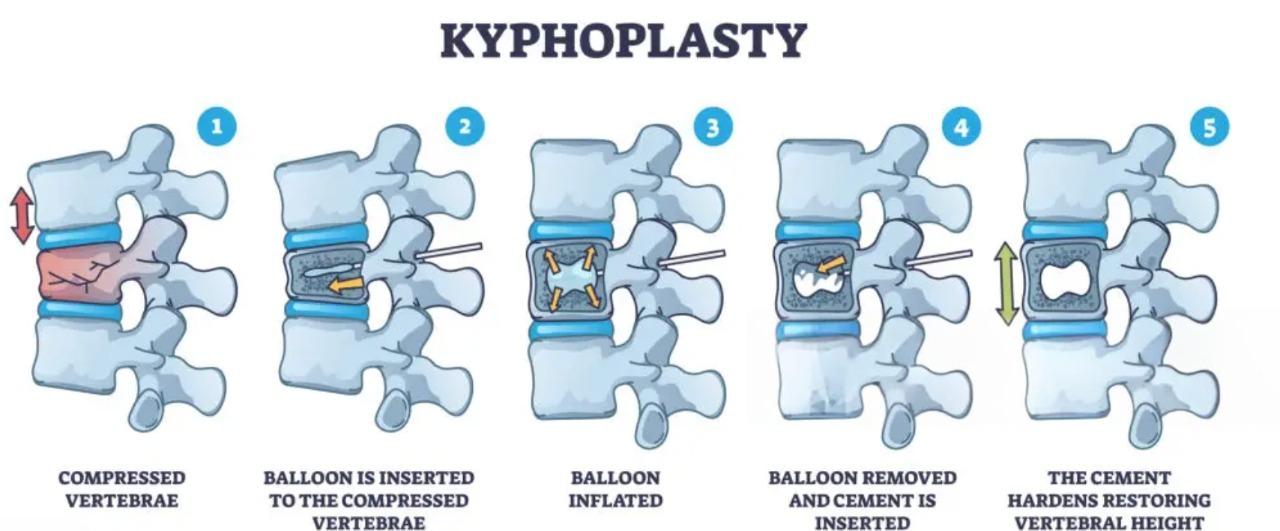
Here’s how it works. A thin cannula is guided into the fractured vertebra under live X-ray. A small orthopaedic balloon is then inflated inside the bone, creating a cavity and gently restoring vertebral height. Bone cement (PMMA) is injected into that cavity, hardens within minutes, and locks the fracture in place.
Unlike open spine surgery, there’s no muscle cutting, no large incision, and no extended hospital stay. Most patients are out of bed within hours.
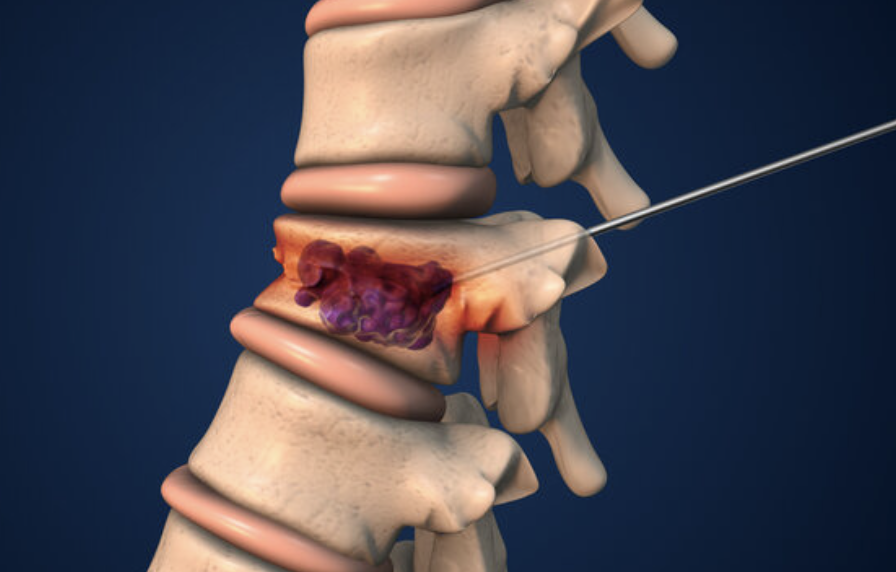
Compression fractures left untreated can progress to spinal deformity, chronic pain, and reduced lung capacity. The longer a vertebra stays collapsed, the harder it becomes to restore. Kyphoplasty addresses the fracture directly, often within weeks of injury, when outcomes are at their best. It’s closely linked with conditions like osteoporosis and degenerative spinal changes that weaken the bone matrix over time.
That’s why early specialist evaluation matters. A simple imaging scan can confirm whether the fracture is acute and treatable with kyphoplasty, or whether it has already healed in a collapsed position.
Persistent back pain after a fall, lifting, or minor strain? Don’t wait it out. Early intervention changes outcomes.
Chronic back pain slowing you down? Book a consultation with Dr. Naveen Tahasildar and take the first step toward lasting relief.
Who Needs Kyphoplasty?
Kyphoplasty isn’t for every back pain patient. It’s a targeted procedure for specific fracture patterns and patient profiles. Dr. Tahasildar evaluates each case using MRI, CT, and clinical assessment before recommending it.
Osteoporotic Compression Fractures:
The most common indication. Postmenopausal women and older adults with weakened bone can sustain vertebral fractures from minor activities like bending, coughing, or lifting groceries. These fractures are often missed initially and dismissed as muscle pain. Kyphoplasty restores stability and relieves pain that medication alone can’t control.
Vertebral Fractures from Spinal Tumours:
Metastatic spinal lesions weaken vertebral bone. Patients with cancer-related compression fractures benefit from kyphoplasty, often combined with tumour-specific treatment like radiation. Dr. Tahasildar’s fellowship training at Amrita Institute, Kochi (combined neurosurgery and orthopaedic spine fellowship) includes microsurgical techniques and spinal tumour resection, making him well-equipped to handle complex oncology-related fractures.
Traumatic Compression Fractures:
Falls, road accidents, or sports injuries can fracture a vertebra in younger patients with otherwise healthy bones. When the fracture is stable but painful, kyphoplasty offers rapid recovery without the long downtime of bracing for 8 to 12 weeks. Recovery is measured in days, not months.
Failed Conservative Management:
Patients whose pain persists beyond 4 to 6 weeks of rest, bracing, and pain medication are good candidates. Continuing pain often signals that the fracture isn’t healing on its own, and surgical stabilisation is needed before deformity progresses.
Conditions like advanced degenerative disc disease often coexist with compression fractures. Addressing bone health alongside the procedure is essential, because one fractured vertebra raises the risk of a second.
How Dr. Naveen Tahasildar Performs Kyphoplasty
Every kyphoplasty Dr. Tahasildar performs follows a precise, image-guided protocol developed across 18+ years of spine practice and refined through international fellowship training in minimally invasive techniques at Aarhus, Denmark.
Pre-Procedure Planning:
Detailed MRI and CT imaging confirm the fracture is acute and identify the exact vertebral level. Bone density scans (DEXA) assess underlying osteoporosis. Blood tests rule out infection or active malignancy near the fracture site. This planning stage is where treatment success is largely decided, before the patient even enters the operating theatre.
Image-Guided Cannula Placement:
Under live fluoroscopy, two narrow cannulas are placed into the fractured vertebra through small skin punctures, usually 5mm or less. Precision here is critical. The cannula tip must reach the centre of the vertebral body without breaching its walls or compromising the spinal canal. This is where surgical volume matters, and 4,000+ procedures of experience translate directly into accuracy.
Balloon Inflation and Cavity Creation:
Orthopaedic balloons are inflated inside the vertebra under controlled pressure. The balloons restore vertebral height and create a defined cavity. This is the step that distinguishes kyphoplasty from vertebroplasty. Height restoration matters for long-term spinal alignment and posture, especially in patients with multiple fractures.
Cement Delivery and Stabilisation:
PMMA bone cement is injected into the cavity under low pressure, reducing the risk of leakage into surrounding tissues or veins. The cement hardens within 10 minutes, locking the fracture and providing immediate structural support.
Recovery is typically a same-day discharge or one overnight observation stay. Most patients walk within hours and resume light activity within 48 hours. Heavy lifting and high-impact activity are restricted for 4 to 6 weeks while the surrounding bone consolidates around the cement.
Post-procedure, Dr. Tahasildar coordinates bone health management. That includes calcium, vitamin D, and where indicated, anti-osteoporosis medication. Treating the underlying cause is as important as treating the fracture itself.
When kyphoplasty is part of broader spinal care, it’s coordinated with treatments for related conditions like facet arthrosis. For a deeper look at how spinal ageing drives fracture risk, see maintaining a healthy spine as you age.
Don’t let back pain hold you back. Reach out to Dr. Naveen Tahasildar for an accurate diagnosis and a personalised treatment plan.
What Are the Benefits of Kyphoplasty?
Kyphoplasty offers advantages that traditional management of compression fractures, like prolonged bracing and bed rest, simply can’t match. For the right patient, the difference in quality of life is significant.
Rapid Pain Relief:
Most patients experience meaningful pain reduction within 24 to 48 hours of the procedure. For someone who has been unable to sleep, walk, or sit comfortably for weeks, that change is immediate and dramatic.
Restoration of Vertebral Height:
The balloon component of kyphoplasty does what vertebroplasty cannot, it actively restores lost vertebral height. This preserves spinal alignment, prevents the “stooped posture” associated with multiple fractures, and protects lung capacity in elderly patients.
Same-Day Mobilisation:
Bed rest after a spinal fracture carries its own risks: muscle loss, blood clots, pneumonia, pressure sores. By getting patients walking within hours, kyphoplasty avoids the cascade of complications that prolonged immobility brings, particularly in older patients.
Minimally Invasive Approach:
With incisions under 5mm, no muscle dissection, and local anaesthesia, kyphoplasty carries lower surgical risk than open procedures. It’s often performed in patients who wouldn’t tolerate major surgery.
The procedure has a strong evidence base, with multiple long-term studies showing sustained pain relief and functional improvement. According to Cleveland Clinic, kyphoplasty is now considered standard of care for symptomatic vertebral compression fractures that fail conservative treatment.
Explore your treatment options with Bangalore’s trusted spine specialist — book your consultation today.
Why Choose Dr. Naveen Tahasildar for Kyphoplasty?

Dr. Naveen Tahasildar trained in minimally invasive spine surgery at Aarhus University Hospital, Denmark, on a SICOT fellowship, the same fellowship that shapes how he approaches kyphoplasty today. With 4,000+ spine procedures performed at Sparsh Hospitals, Vasanth Nagar and his clinic on Sarakki Road, he brings both volume and precision to every case. His technique focuses on minimal cement volume, accurate placement under live imaging, and same-day mobilisation. That’s why patients consistently report rapid pain relief and a quick return to daily life.
Beyond the operating room, Dr. Tahasildar has authored 26 peer-reviewed publications cited 256+ times and contributed a chapter to the Springer textbook Pediatric Scoliosis. He serves as faculty for AO Spine and reviews papers for national and international spine journals. International patients from the USA, Middle East, Mauritius, Bangladesh, and Africa travel to Bangalore for his care. With two clinic locations, central Bangalore (Sparsh Hospitals, Infantry Road) and south Bangalore (Sarakki Road), world-class spine care is accessible across the city.
FAQs
1. Is kyphoplasty a major surgery?
No. It’s minimally invasive, performed through 5mm incisions, and most patients go home the same day.
2. How soon does pain relief occur after kyphoplasty?
Most patients feel significant pain relief within 24 to 48 hours of the procedure.
3. Can kyphoplasty prevent future spine fractures?
Not directly. It treats the existing fracture. Bone health treatment is essential to prevent new fractures.
4. Is kyphoplasty safe for elderly patients?
Yes. It’s particularly suitable for elderly patients with osteoporotic fractures because of its low surgical stress.
5. How long does the kyphoplasty procedure take?
The procedure typically takes 45 to 60 minutes per vertebral level treated.
6. Will I need anaesthesia for kyphoplasty?
Most cases are done under local anaesthesia with light sedation. General anaesthesia is rarely required.
Disclaimer: The information shared in this content is for educational purposes and not for promotional use.