
Back Pain Treatment in Bangalore
Back pain affects nearly 80% of adults at some point in life, ranging from short-lived muscle strain to chronic conditions caused by disc disease, spinal stenosis, or nerve compression. Most cases improve with conservative care, but persistent or radiating pain needs specialist evaluation. Early diagnosis prevents long-term disability and protects spinal function.
According to Dr. Naveen Tahasildar, a leading spine surgeon in Bangalore, “Back pain is not always a serious condition, but it should never be ignored when it lasts beyond a few weeks or starts radiating into the legs. Identifying the source early is what separates a quick recovery from years of chronic pain.”
With 18+ years exclusively in spine surgery and 4,000+ procedures performed, Dr. Tahasildar offers comprehensive back pain treatment in Bangalore. His approach combines precise diagnostics, evidence-based conservative care, and minimally invasive surgery only when truly indicated. Most patients never need an operation. Those who do, recover faster because of how the procedure is planned and executed.
Book an Appointment with Dr. Naveen Tahasildar
What Causes Back Pain?
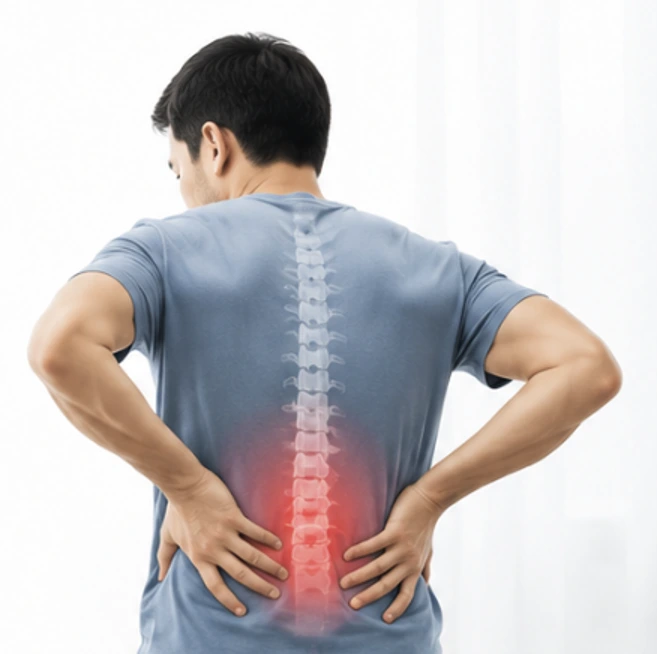
Back pain is a symptom, not a diagnosis. Identifying the exact source is the first step in any meaningful treatment plan. Causes range from simple muscle strain to structural spinal problems that need targeted intervention.
Muscle and Ligament Strain:
Lifting incorrectly, sudden twisting, or prolonged poor posture can overload the soft tissues supporting the spine. Pain usually settles within 2 to 4 weeks with rest and physiotherapy. When it doesn’t, a deeper cause is often involved.
Disc-Related Problems:
Discs between vertebrae act as shock absorbers. When they bulge, herniate, or degenerate, they can compress nearby nerves, causing localised back pain that often radiates to the legs. Conditions like a slipped disc are among the most common structural causes seen in clinics.
Facet Joint and Spinal Degeneration:
The small joints of the spine wear down with age and overuse, leading to inflammation and stiffness. This is more common after 40 and often coexists with disc problems, producing pain that worsens with extension or prolonged standing.
Nerve Compression and Spinal Stenosis:
Narrowing of the spinal canal puts pressure on nerves, producing pain that travels into the buttocks and legs. Walking distance gradually decreases. This pattern needs careful imaging to confirm and rule out red-flag causes.
Spinal infections, fractures, and tumours are rarer causes but must be excluded in any patient with persistent or unusual symptoms. According to the NHS, most back pain improves within 6 weeks, but red-flag symptoms like fever, weight loss, or weakness need urgent specialist review.
When Should You See a Spine Specialist?
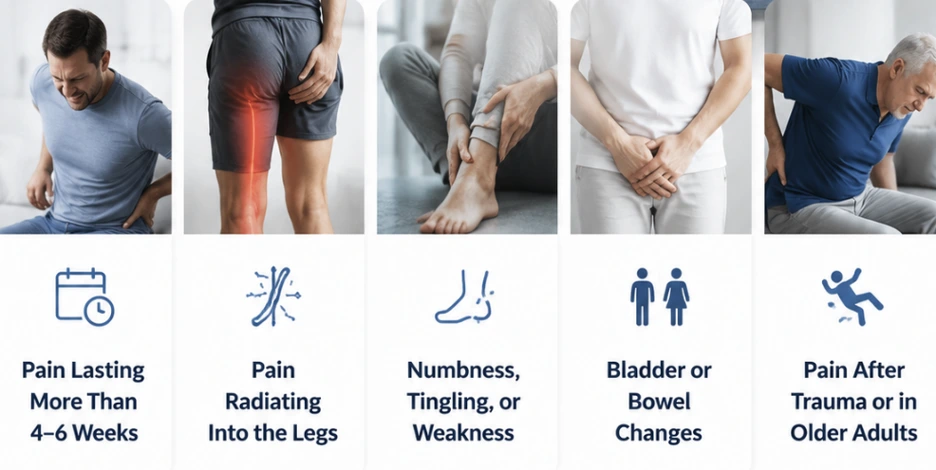
Most back pain settles on its own. But certain warning signs mean it’s time to stop self-treating and get evaluated. Recognising these patterns can prevent permanent nerve damage.
Pain Lasting More Than 4 to 6 Weeks:
If back pain persists beyond a month despite rest, painkillers, and basic physiotherapy, structural causes need to be ruled out with imaging. Continued pain usually means something specific is driving it.
Pain Radiating Into the Legs:
Pain travelling down the buttock or leg often signals nerve involvement, commonly from a disc or stenosis. This pattern, sometimes called sciatica, shouldn’t be left untreated, especially if it worsens with walking or sitting.
Numbness, Tingling, or Weakness:
Loss of sensation or muscle strength in the legs is a clear neurological warning sign. It indicates nerve compression that may need decompression surgery if conservative care fails. Delaying treatment risks permanent deficit.
Bladder or Bowel Changes:
Loss of bladder or bowel control with back pain is a surgical emergency, called cauda equina syndrome. It needs evaluation within 24 hours. Don’t wait it out, don’t self-medicate.
Pain After Trauma or in Older Adults:
Back pain following a fall or accident, especially in patients over 60 or those with osteoporosis, may indicate a vertebral compression fracture and needs prompt imaging.
If any of these apply, specialist consultation isn’t optional. Early intervention changes outcomes.
How Dr. Naveen Tahasildar Treats Back Pain
Every back pain patient is different. Dr. Tahasildar’s approach starts with accurate diagnosis, then matches treatment to the actual cause, not to a generic protocol. Surgery is the last option, not the first.
Detailed Clinical Assessment:
A thorough history, neurological examination, and review of red-flag symptoms come first. This is where many cases get correctly identified without expensive scans. Imaging follows only when clinical findings warrant it.
Targeted Imaging and Diagnosis:
MRI, CT, X-rays, and where needed, EMG studies confirm the structural source. The goal is precise localisation, not blanket investigation. Treatment decisions depend on matching imaging findings to actual clinical symptoms, not just abnormal scan reports.
Conservative and Non-Surgical Care:
Most patients respond well to physiotherapy, posture correction, anti-inflammatory medications, lifestyle changes, and activity modification. Where needed, image-guided injections, like epidural steroid or facet joint blocks, provide targeted relief while avoiding surgery.
Minimally Invasive and Surgical Options:
When conservative care fails or neurological deficits develop, minimally invasive spine surgery (MISS) offers definitive treatment with shorter recovery. Dr. Tahasildar’s SICOT fellowship at Aarhus University Hospital, Denmark, focused specifically on MISS, revision spine surgery, and complex deformity correction. Procedures like microdiscectomy, decompression, and selective fusion are performed with small incisions and rapid recovery.
For related conditions, coordinated care extends to spinal stenosis and degenerative spine problems. Patients looking to understand prevention can read about maintaining a healthy spine as you age.
Consult Bangalore’s Leading Spine Surgeon Book An Appointment
What to Expect During Recovery
Recovery depends entirely on the underlying cause and the treatment chosen. Most patients with mechanical back pain recover within weeks. Those who undergo surgery follow a structured rehabilitation plan that’s just as important as the procedure itself.
Conservative Recovery Timeline:
Mild to moderate back pain typically improves within 2 to 6 weeks with physiotherapy and posture changes. Patients are encouraged to stay active. Prolonged bed rest delays recovery and weakens the supporting muscles.
Post-Surgical Recovery:
After minimally invasive procedures, most patients walk within hours and return home within 1 to 2 days. Light desk work resumes within 2 weeks. Heavier activity, sport, and driving are reintroduced gradually over 4 to 8 weeks.
Long-Term Spine Health:
Recovery doesn’t end when the pain stops. Core strengthening, posture correction, ergonomic adjustments, and weight management protect against recurrence. According to Cleveland Clinic, nearly half of recovered patients experience another back pain episode within a year without these lifestyle changes.
Follow-Up and Monitoring:
Periodic review ensures recovery stays on track. Any new symptoms, weakness, or recurrence are addressed early before they progress to bigger problems.
Recovery isn’t just about returning to where you were. It’s about being functionally stronger than before.
Why Choose Dr. Naveen Tahasildar for Back Pain Treatment?
Dr. Naveen Tahasildar brings 18+ years of focused spine expertise and 4,000+ procedures performed across two Bangalore locations, Sparsh Hospitals on Infantry Road, Vasanth Nagar and Naveen Spine & Ortho Clinic on Sarakki Road. His international training spans four fellowships, Melbourne (AOA), Aarhus Denmark (SICOT), Hong Kong (AADO), and Amrita Kochi, giving him direct exposure to global standards in both conservative and surgical back pain management. His clinical philosophy is straightforward: avoid surgery whenever possible, and when surgery is needed, use the least invasive technique that solves the problem.
Beyond clinical practice, Dr. Tahasildar has authored 26 peer-reviewed publications cited 256+ times and contributed a chapter to the Springer textbook Pediatric Scoliosis. He serves as faculty for AO Spine and reviews papers for national and international spine journals. International patients from the USA, Middle East, Mauritius, Bangladesh, and Africa travel to Bangalore for his care. With two clinic locations covering central, north, south, and west Bangalore, expert spine care is accessible across the city.
Book an Appointment with Dr. Naveen Tahasildar
FAQs
1. Is back pain always a serious condition?
No. Most cases settle within weeks. Pain lasting beyond 4 to 6 weeks needs specialist evaluation.
2. Can back pain be treated without surgery?
Yes. Around 90% of patients improve with physiotherapy, medication, and lifestyle changes alone.
3. When does back pain need surgery?
Surgery is considered for nerve compression, weakness, or pain that fails 6+ weeks of conservative care.
4. How long is the recovery after spine surgery?
After minimally invasive surgery, most patients return to light work within 2 weeks.
5. Can back pain come back after treatment?
Yes, especially without core strengthening and posture correction. Long-term prevention matters as much as treatment.
6. Is MRI always needed for back pain?
No. MRI is ordered only when clinical findings or red-flag symptoms warrant it.