
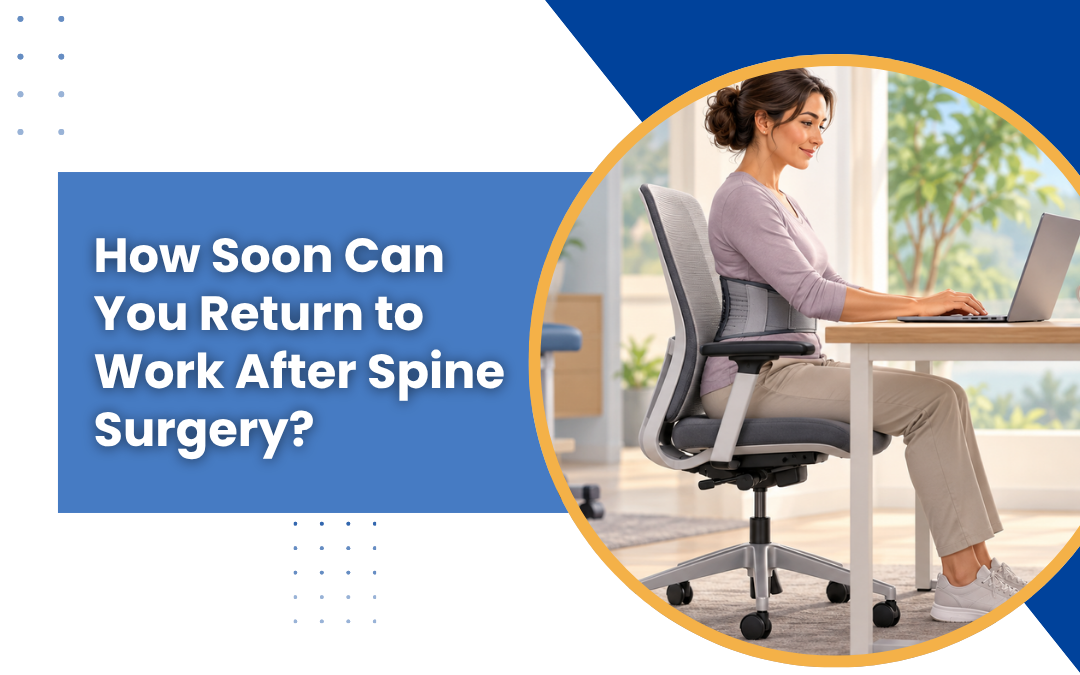
The answer depends largely on the nature of your work. A desk job typically allows a return within two to six weeks after a minor procedure. Physically demanding roles involving lifting or long hours on your feet often need three to six months instead. So a realistic return to work spine surgery timeline has to start with what your job actually requires, not just the surgery itself.
According to Dr. Naveen Tahasildar, Spine Surgeon in Bangalore, “Patients naturally want a fixed date, and that’s understandable, recovery time affects income and daily life. But I’ve seen several set themselves back by returning too soon. The spine heals at its own pace, and rushing that process rarely works in the patient’s favour.”
What Affects How Quickly You Can Go Back to Work?
Timelines vary even between patients with the same surgery. A handful of factors decide where someone lands.
Type of procedure: A minimally invasive discectomy tends to heal faster than a multilevel fusion. As a general rule, the larger the surgery, the longer recovery runs.
Job demands: A desk places far less strain on the spine than physical labour does, and roles that involve heavy lifting or standing for long stretches usually need the most time before clearance.
Age and general health: Younger patients with good bone density often recover sooner, whereas underlying conditions like diabetes can slow healing down.
How recovery is managed: Patients who stay consistent with physiotherapy and stick to activity restrictions tend to get cleared earlier. It’s a step that matters more than most people realise.
Recovery planning often goes hand in hand with financial planning, so knowing costs upfront helps. The breakdown on Spine Surgery Cost in India covers that side of things.
What Does a Typical Spine Surgery Recovery Look Like Week by Week?
Recovery unfolds in phases rather than arriving all at once, and most patients notice a fairly consistent pattern.
First two weeks: The priority is wound healing and short walks. Driving, lifting, and prolonged sitting aren’t advised yet.
Weeks three to six: Mobility starts improving and physiotherapy usually begins in earnest. Many desk based workers get partial clearance around this stage.
Weeks six to twelve: Stamina keeps building. Light physical work may be allowed, though heavy lifting stays off limits.
Three months onward: Fusion patients generally reach solid bone healing by this point, and physically demanding roles get reassessed accordingly.
Understanding the risks involved helps set realistic expectations too. Is Spine Surgery Safe? Key Risks to Know? covers that in more depth.
Understanding how spine procedures work, and what the actual risks look like, matters here too. Is Spine Surgery Safe? Key Risks to Know? covers that in more depth.
Why Choose Dr. Naveen Tahasildar for Spine Surgery and Recovery Planning?
Dr. Naveen Tahasildar has spent over 18 years performing spine surgery in Bangalore and holds an MBBS and MS in Orthopaedics along with international fellowships in spine care. Return to work planning is addressed as part of the surgical discussion, not treated as an afterthought once the patient is discharged. Job requirements are factored in from the outset, shaping both the surgical approach and the rehabilitation plan. Physiotherapy and follow up care are coordinated closely with the wider clinical team.
This approach matters because a recovery timeline given without understanding a patient’s actual job demands is little more than a guess. Patients receive clearance based on their real work requirements rather than a generic chart, which makes for a smoother recovery overall. Call +91 7676090119 to book your consultation.
Planning your recovery after spine surgery?
FAQs
Can I drive after spine surgery?
Usually after two to four weeks, once pain medication is discontinued.
How long is bed rest needed?
Very little. Short walks typically begin within a day or two.
Does fusion surgery take longer to recover from?
Yes, fusion generally requires three to six months for complete bone healing.
Can I work from home during recovery?
Often, provided sitting periods stay short and proper back support is used.
References
- NIH, National Institute of Neurological Disorders and Stroke — Low Back Pain Fact Sheet: https://www.ninds.nih.gov/health-information/patient-caregiver-education/fact-sheets/low-back-pain-fact-sheet
- NCBI, National Institutes of Health — Return to Work After Lumbar Spine Surgery: https://pmc.ncbi.nlm.nih.gov/
Disclaimer
This blog is for educational purposes only. If you experience sudden back pain, height loss, or a stooped posture, consult a spine specialist for a proper bone health evaluation.