
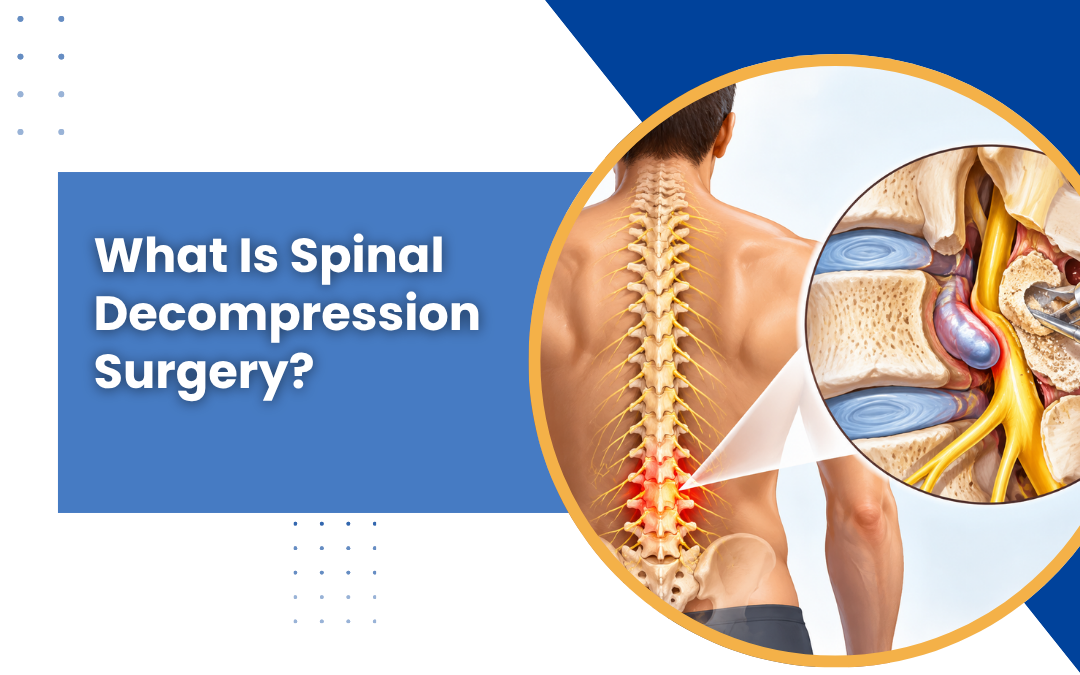
A nerve under pressure needs one thing above all, space. That’s really the whole point here. Usually it’s a bulging disc, a bone spur, or a canal that’s narrowed with age doing the squeezing. Spinal decompression surgery clears that obstruction so the nerve can get back to working the way it should
According to Dr. Naveen Tahasildar, Spine Surgeon in Bangalore, “Patients often assume this is one fixed operation. It isn’t, it’s a whole category. What we actually do depends on where the compression sits and what’s behind it.”
When Is Spinal Decompression Surgery Recommended?
Surgery isn’t usually step one. It tends to come up once other approaches have already had a fair shot at working.
Failed conservative treatment: Physiotherapy comes first, along with medication and injections. If symptoms are still hanging around after weeks or months, surgery enters the conversation.
Progressive nerve symptoms: Weakness or numbness that keeps getting worse, not better, is worth taking seriously and flagging early.
Loss of bladder or bowel control: Rare. But this one isn’t something to wait on, it needs same day medical attention.
Severe unrelenting pain: When pain won’t ease up despite proper treatment and keeps interfering with everyday life, decompression often becomes the sensible next move.
A good number of these cases trace back to spinal stenosis, where the canal has simply narrowed too much over time. Spinal Stenosis Treatment in Bangalore goes into how that’s typically handled.
What Are the Different Types of Spinal Decompression Surgery?
Which technique gets used really comes down to where the compression sits and what’s causing it.
Discectomy: Removes part or all of a herniated disc that’s pressing on a nerve root. Usually the first choice when a disc is the problem.
Laminectomy: Takes out a section of vertebral bone to widen the canal and free up the spinal cord underneath.
Foraminotomy: Widens the small opening where a nerve root exits the spine, useful when that’s exactly where the pinch is happening.
Minimally invasive decompression: Smaller incisions, less disruption to the tissue around it, and generally a quicker bounce back.
Not every disc problem needs to head straight for the operating table, by the way. How to Heal a Herniated Disc Without Surgery? covers what the earlier stage options look like
Why Choose Dr. Naveen Tahasildar for Spinal Decompression Surgery?
Dr. Naveen Tahasildar has put in over 18 years in spine surgery, backed by an MBBS, MS in Orthopaedics, and fellowships abroad in spine treatment. Given the choice, he’ll go with whatever’s least invasive as long as it actually solves the problem. Open surgery isn’t where he starts, it’s what he reaches for when nothing smaller will do the job.
Before anything gets decided, there’s detailed imaging and a proper clinical workup. Because here’s the thing, two patients can walk in with almost the same symptoms and still need completely different surgical plans. Treating everyone the same way just doesn’t hold up. Call +91 7676090119 to book your consultation.
Dealing with nerve pain that won’t settle down?
FAQs
Is spinal decompression surgery major surgery?
Depends on how severe things are, it can be minimally invasive or open.
How long does recovery take after decompression surgery?
Somewhere between a few weeks and a few months, depending on the technique.
Does spinal decompression surgery always involve fusion?
No. Fusion only gets added when spinal stability is also at stake.
Can nerve damage from compression be reversed after surgery?
Often, yes, but how long the nerve was compressed makes a real difference.
References
- NIH, National Institute of Neurological Disorders and Stroke — Low Back Pain Fact Sheet: https://www.ninds.nih.gov/health-information/patient-caregiver-education/fact-sheets/low-back-pain-fact-sheet
- NCBI, National Institutes of Health — Spinal Decompression Surgery Overview: https://pmc.ncbi.nlm.nih.gov/
Disclaimer
This blog is for educational purposes only. If you experience sudden back pain, height loss, or a stooped posture, consult a spine specialist for a proper bone health evaluation.