
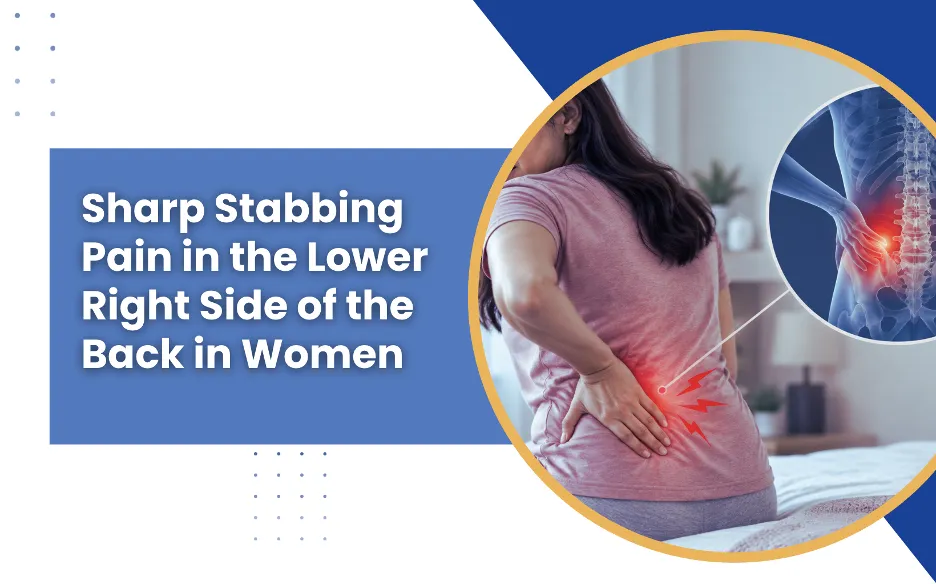
A sudden, sharp, stabbing pain in the lower right side of the back can be alarming, especially when it comes out of nowhere. Dr. Naveen Tahasildar, a leading spine surgeon in Bangalore, explains that this type of pain doesn’t always point to a spine problem. In women, the lower right back sits close to the kidney, the ovary, the appendix, and several spinal structures, so the same complaint can have very different explanations depending on what’s actually going on underneath.
Some women feel this pain after a long day at the desk or a poorly slept night. Others notice it flares with a menstrual cycle, or shows up alongside fever and nausea. The pattern of the pain, what makes it worse, and what else comes with it, all matter far more than the location alone.
“A sharp, one-sided back pain in a woman is never a diagnosis by itself. It’s a starting point. We have to look at the spine, the kidneys, and the reproductive organs together before deciding on a treatment path.”
— Dr. Naveen Tahasildar, Spine Surgeon, Bangalore
Why Does Lower Right Back Pain Feel Sharp and Stabbing?
Pain described as “stabbing” usually means a nerve, joint, or inflamed structure is being irritated suddenly, rather than a dull, generalised ache from tired muscles. In the lower back, this kind of pain can come from:
- The facet joints or sacroiliac (SI) joint, which can catch or lock during certain movements
- A nerve root being pinched or inflamed, sending a sharp jolt down the back or leg
- Referred pain from an organ near the lower back and pelvis, such as a kidney or ovary, that the brain interprets as coming from the back itself
Because referred pain and spinal pain can feel almost identical at first, working out where the pain is actually coming from is the first real step in treatment.
Common Causes of Sharp Stabbing Pain in the Lower Right Back in Women
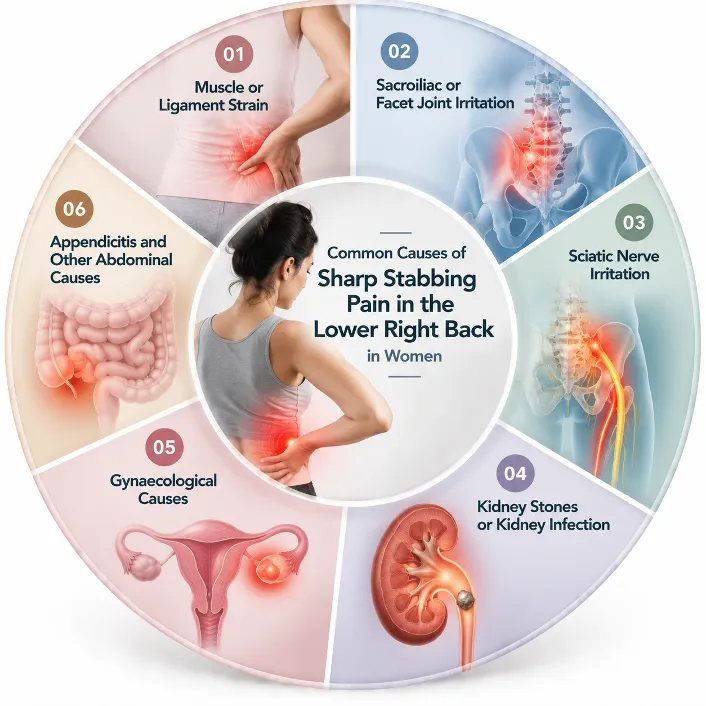
Muscle or Ligament Strain
The most frequent cause by far is a strained muscle or overstretched ligament, often from lifting awkwardly, an abrupt twist, or hours of poor sitting posture. The pain is usually one-sided, worsens with certain movements, and eases with rest, gentle stretching, and time. It’s uncomfortable but rarely a warning sign on its own.
Sciatic Nerve Irritation
When a nerve root in the lower spine is compressed, usually by a disc bulge or narrowing of the spinal canal, the resulting pain can feel like a sharp jolt in the lower back that sometimes travels toward the hip or leg. Spinal canal narrowing, discussed in more detail in this overview of spinal stenosis treatment, is one of the more common structural causes behind this pattern in older adults.
Sacroiliac or Facet Joint Irritation
The SI joint connects the base of the spine to the pelvis, and when it’s irritated, the pain is often sharp, stays on one side, and can spread into the buttock. Facet joint irritation behaves similarly, typically getting worse with bending backward or twisting. If you’d like a deeper look at how one-sided nerve and joint pain in the lower back can present and progress, Dr. Naveen Tahasildar’s detailed piece on right-sided sciatica covers this in more depth, including when it starts to involve the leg.
Kidney Stones or Kidney Infection
The right kidney sits just above the waistline, and a stone moving through the ureter can cause an intense, cramping, stabbing pain in the back that often spreads toward the lower abdomen or groin. According to information published by the National Institute of Diabetes and Digestive and Kidney Diseases (NIDDK), an untreated or lodged stone can escalate quickly and may need urgent medical attention. Fever, burning during urination, or blood in the urine alongside back pain should never be brushed off as ordinary backache.
Gynaecological Causes
In women specifically, ovarian cysts, endometriosis, and pelvic inflammatory disease can all cause pain that radiates to the lower right back, particularly around the menstrual cycle. This pain often sits lower and more toward the pelvis than typical spinal pain, and it may come with abnormal bleeding, pelvic cramping, or pain during intercourse. A gynaecological evaluation is worth considering if the pain tracks closely with the menstrual cycle.
Appendicitis and Other Abdominal Causes
Because the appendix sits on the lower right side of the abdomen, its inflammation can occasionally be felt as pain radiating into the lower back on that side. This is typically accompanied by abdominal tenderness, nausea, and sometimes fever, and it tends to worsen fairly quickly rather than staying mild for days.
Not sure whether your pain is coming from your spine or somewhere else? An accurate diagnosis is the fastest way to the right treatment.
Red Flags: When This Pain Needs Urgent Attention
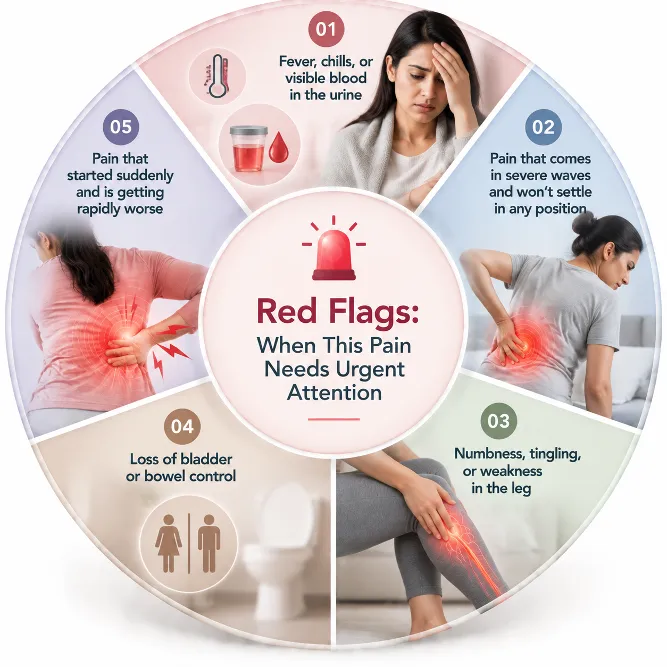
Most sharp back pain settles with rest and simple care, but a few signs mean you shouldn’t wait for a routine appointment:
- Fever, chills, or visible blood in the urine
- Pain that comes in severe waves and won’t settle in any position
- Numbness, tingling, or weakness in the leg
- Loss of bladder or bowel control
- Pain that started suddenly and is getting rapidly worse
Any of these warrant a same-day medical evaluation rather than a wait-and-watch approach.
How Is the Cause of This Pain Diagnosed?
Dr. Naveen Tahasildar, who brings over 18 years of dedicated spine experience across his practice in Bangalore, approaches sharp, one-sided back pain in women with a structured, conservative-first process. You can read more about his training and clinical background on the About Dr. Naveen Tahasildar page.
The assessment usually starts with a detailed history, since the timing, triggers, and accompanying symptoms often point strongly toward one system over another. This is followed by a physical examination that checks the spine’s movement and tenderness, along with specific tests for the SI joint and nerve involvement. If a spinal cause is suspected, X-rays or an MRI help confirm it. If history suggests a kidney, urinary, or gynaecological source, the patient is guided toward the right specialist, since spine treatment won’t resolve pain that isn’t coming from the spine in the first place.

Treatment Options Based on the Underlying Cause
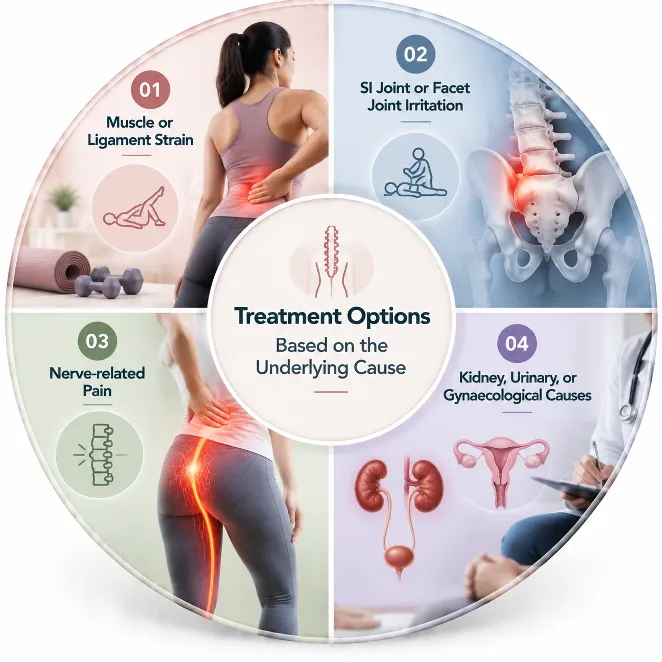
Once the source is identified, treatment is matched to it rather than applied generically:
- Muscle or ligament strain: Rest, gentle movement, physiotherapy, and anti-inflammatory measures usually resolve this within a couple of weeks.
- SI joint or facet joint irritation: Targeted physiotherapy, posture correction, and, in persistent cases, image-guided injections.
- Nerve-related pain: A structured plan starting with physiotherapy and medication, escalating to minimally invasive procedures only if conservative care doesn’t help after several weeks.
- Kidney, urinary, or gynaecological causes: Referral to the appropriate specialist for hydration, medication, or further investigation, since these need a different line of treatment altogether.
If your back pain has lasted more than a couple of weeks or keeps coming back, it’s worth getting it looked at properly. Book An Appointment with Dr. Naveen Tahasildar’s clinic in Bangalore.
FAQs
1. Is sharp stabbing pain in the lower right back always something serious?
Not always. Most cases are due to muscle strain or minor joint irritation and settle within a couple of weeks. But sudden, severe pain with fever, nausea, or urinary changes should be checked promptly, since it can point to a kidney or abdominal issue.
2. Can kidney stones cause pain only on the right side of the back?
Yes. A stone in the right kidney or the right ureter typically causes pain localised to that side, often spreading toward the lower abdomen or groin as the stone moves.
3. Why does lower right back pain in women so often get linked to reproductive organs?
The ovaries and surrounding pelvic structures sit close to the lower back, and conditions like ovarian cysts or endometriosis can irritate nearby nerves or tissues, producing pain that’s felt in the back rather than the pelvis itself.
4. How can I tell if the pain is coming from a muscle or from my spine?
Muscle strain pain usually worsens with specific movements and improves with rest, while spine-related pain, especially from a nerve, often comes with tingling, numbness, or pain that travels into the leg. A clinical exam is the most reliable way to tell the two apart.
5. Should I see a spine specialist or a gynaecologist for this kind of pain?
If the pain worsens with spinal movement, twisting, or bending, a spine specialist is the right first step. If it tracks closely with your menstrual cycle or comes with pelvic symptoms, a gynaecological evaluation makes more sense. When in doubt, a spine specialist can help rule out a spinal cause and guide the referral from there.