
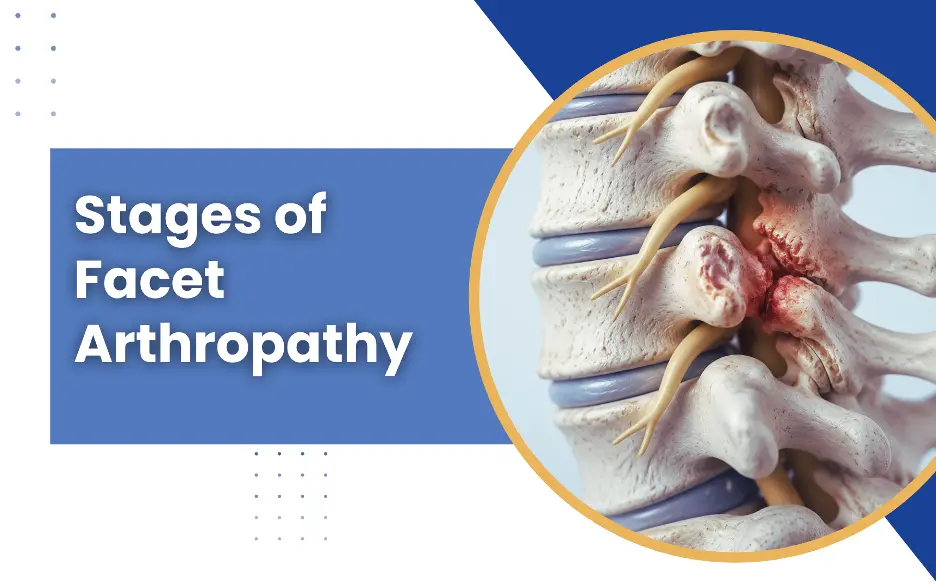
Facet arthropathy, also called facet joint arthritis or facet syndrome, is a degenerative condition affecting the small joints that connect each vertebra to the one above and below it. Dr. Naveen Tahasildar, a leading spine surgeon in Bangalore, explains that these joints allow the spine to bend, twist, and rotate, and like any other joint in the body, they wear down over time. What starts as mild stiffness after long hours of sitting can, over years, progress into a condition closely related to facet arthrosis that limits movement and causes persistent pain.
Facet arthropathy doesn’t appear overnight. It develops in stages, and understanding where a patient falls on that spectrum changes the entire treatment approach, from simple lifestyle changes in the early stage to more involved interventions later on.
“Facet arthropathy is often dismissed as ordinary back stiffness. But the earlier we catch it on the staging spectrum, the more treatment options a patient has, and the less invasive those options tend to be.” — Dr. Naveen Tahasildar, Spine Surgeon, Bangalore
Noticing stiffness that worsens with age or after standing for long periods? Facet joint changes often start quietly. Early evaluation by a spine specialist can catch it before it limits your mobility.
What Is Facet Arthropathy?

Facet arthropathy refers to the progressive breakdown of the facet joints, the paired joints at the back of each vertebra that guide spinal movement and share load with the intervertebral discs. Each facet joint is lined with cartilage, much like the knee or hip, and is surrounded by a capsule that keeps it lubricated and stable.
Over time, repetitive movement, mechanical stress, and age-related wear thin this cartilage. The joint surfaces become rough, the capsule loosens, and the body responds by forming bone spurs (osteophytes) in an attempt to stabilise the joint. This process rarely happens in isolation. It’s frequently linked to degenerative disc disease, since a thinning disc shifts more load onto the facet joints behind it, accelerating their wear.
Facet arthropathy most commonly affects the lower back (lumbar spine) and neck (cervical spine), the two regions that carry the most mechanical load and movement. Symptoms typically include localised stiffness, pain that worsens with extension or twisting, and discomfort that eases with rest, at least in the early stages.
The 4 Stages of Facet Arthropathy

Facet joint degeneration is generally classified into four stages, ranging from mild cartilage changes to severe joint collapse. Staging helps determine whether a patient needs conservative management, injections, or surgical intervention.
Stage 1:
Early Cartilage Wear In this earliest stage, the cartilage lining the facet joint begins to thin, but the joint space and overall structure remain largely intact. Patients may notice mild, intermittent stiffness, especially in the morning or after prolonged sitting, which improves with movement. Imaging at this stage often shows only subtle changes, and many people don’t seek treatment yet because symptoms are so mild.
Stage 2:
Joint Space Narrowing As cartilage continues to wear, the space between the joint surfaces narrows. Patients typically experience more noticeable pain, particularly with bending backward or twisting the spine. This is the stage where early osteophyte formation begins, and where physiotherapy, posture correction, and activity modification make the biggest long-term difference.
Stage 3:
Osteophyte Formation and Joint Hypertrophy Bone spurs enlarge, and the joint capsule thickens as the body tries to compensate for instability. This joint hypertrophy can begin to encroach on nearby nerve pathways, sometimes contributing to spinal stenosis if the narrowing affects the spinal canal or nerve root exit points. Pain becomes more constant, and patients may notice discomfort in the buttocks or thighs.
Stage 4:
Severe Degeneration and Joint Collapse In advanced facet arthropathy, cartilage loss is near-complete, osteophytes are extensive, and the joint may become unstable or, in some cases, partially fused. This stage is often accompanied by significant nerve compression, chronic pain, and reduced spinal mobility. Patients at this stage frequently need more advanced interventions, since conservative treatment alone rarely provides lasting relief.
Not sure which stage best describes your symptoms? A detailed clinical and imaging assessment can pinpoint exactly where you are and what treatment will help most.
Symptoms That Signal Facet Joint Involvement
Facet arthropathy symptoms vary by stage, but certain patterns consistently point to the facet joints as the source of pain rather than a disc or nerve root issue.
Localised Back or Neck Pain:
Pain tends to sit close to the spine rather than radiating widely, and often worsens with backward bending or twisting movements. Many patients initially describe this simply as back pain that flares with certain postures.
Morning Stiffness:
Stiffness that is worse first thing in the morning or after long periods of inactivity, and improves gradually with gentle movement, is a hallmark of early facet joint degeneration.
Referred Pain to the Buttocks or Thighs:
As the condition progresses, inflammation and joint hypertrophy can irritate nearby nerve structures, producing pain that spreads into the buttocks or upper thigh. This is different from the sharp, shooting pain typical of true sciatica, though the two can sometimes coexist.
Pain That Eases With Forward Bending:
Unlike disc-related pain, which often worsens with forward flexion, facet joint pain typically improves when the spine is flexed forward and worsens with extension, a distinguishing clue during clinical assessment.
According to the Cleveland Clinic, facet joint pain accounts for a significant proportion of chronic low back pain cases, particularly in older adults, making accurate diagnosis essential before starting treatment.
How Dr. Naveen Tahasildar Diagnoses and Treats Facet Arthropathy

Dr. Naveen Tahasildar brings 18+ years of focused spine expertise and 4,000+ procedures performed across two Bangalore locations, Sparsh Hospitals on Infantry Road, Vasanth Nagar, and Naveen Spine & Ortho Clinic on Sarakki Road. His international fellowship training, including SICOT at Aarhus University Hospital, Denmark, shapes a staged, conservative-first approach to facet joint disease, escalating treatment only when it’s genuinely needed.
Diagnosis begins with a detailed clinical examination, correlating symptom patterns with standing and dynamic X-rays, and MRI when nerve involvement is suspected. Diagnostic facet joint injections are sometimes used to confirm the exact source of pain before planning further treatment.
Treatment is matched to the stage. Early-stage facet arthropathy responds well to physiotherapy, posture correction, and anti-inflammatory management. Moderate cases may benefit from image-guided facet joint injections or medial branch blocks, which can also serve a diagnostic purpose. For more advanced, stage 3 and 4 disease with persistent pain or nerve compression, options range from radiofrequency ablation to targeted surgical decompression, always chosen based on what will restore function with the least possible intervention. You can learn more about Dr. Naveen Tahasildar’s approach and fellowship training, and review real patient outcomes in his case studies.
“Not every patient with facet arthropathy needs a procedure. A large number improve significantly with the right physiotherapy and posture changes. Staging the condition accurately is what tells us who needs more than that.” — Dr. Naveen Tahasildar, Spine Surgeon, Bangalore
FAQs
1. Is facet arthropathy the same as arthritis?
Yes, in a sense. Facet arthropathy is a form of osteoarthritis affecting the small joints of the spine, following the same cartilage wear-and-tear process seen in other joints like the knee or hip.
2. Can facet arthropathy be reversed?
The joint changes themselves cannot be reversed, but progression can be slowed significantly, and symptoms well managed, especially when treatment starts in the early stages.
3. What is the best test to diagnose facet arthropathy?
X-rays and MRI help identify structural changes, but a diagnostic facet joint injection is often the most reliable way to confirm the facet joints as the exact source of pain.
4. Does facet arthropathy always require surgery?
No. Most patients, particularly in stages 1 and 2, manage well with physiotherapy, activity modification, and occasionally injections. Surgery is reserved for advanced, unresponsive cases.
5. How is facet arthropathy different from a slipped disc?
Facet arthropathy involves the small joints at the back of the spine and typically worsens with backward bending, while a slipped disc involves the cushioning discs and often worsens with forward bending or sitting.
Disclaimer
This blog is for informational and educational purposes only and is not a substitute for professional medical advice. Always consult a qualified spine specialist for diagnosis and treatment.