

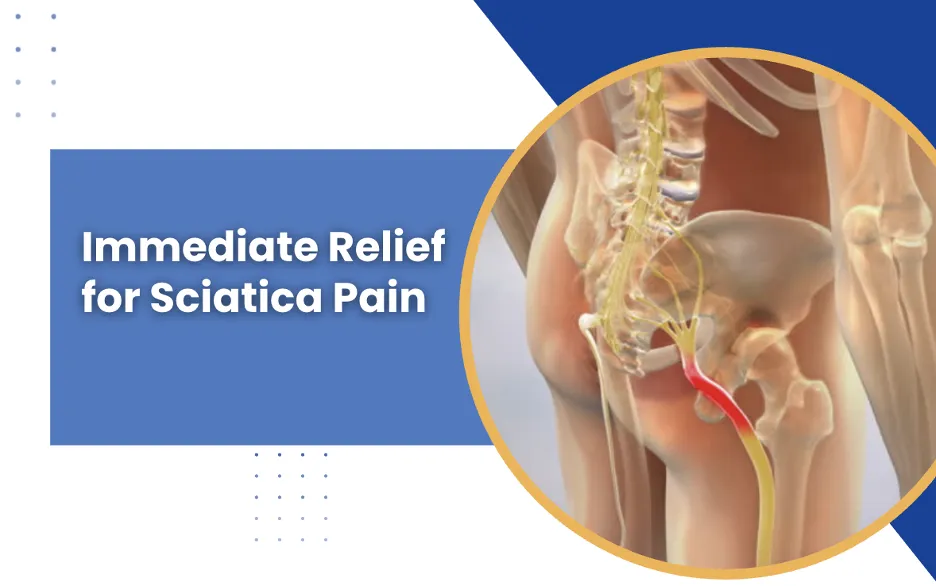
Sciatica is the sharp, shooting, or burning pain that travels from the lower back down through the buttock and into the leg, following the path of the sciatic nerve. It can range from a mild ache to pain so severe that standing, sitting, or walking becomes difficult. Dr. Naveen Tahasildar, a leading spine surgeon in Bangalore, sees sciatica as one of the most common reasons patients seek urgent spine consultation, usually because the pain has stopped them from working, sleeping, or moving normally.
Most cases of sciatica are caused by a herniated disc, spinal stenosis, or, less commonly, facet joint irritation, all of which put pressure on or inflame the nerve roots that form the sciatic nerve. While the underlying cause needs proper diagnosis, there are safe, evidence-based steps that can bring meaningful relief in the acute phase while a longer-term plan is worked out.
“The instinct with sciatica is often to stay completely still, but prolonged bed rest usually makes it worse. The right combination of gentle movement, positioning, and pain control gets most patients through the acute phase far more comfortably.”
— Dr. Naveen Tahasildar, Spine Surgeon, Bangalore
Dealing with sudden or worsening sciatica pain? Getting the right diagnosis early prevents unnecessary suffering and guides safer, faster relief.
What Causes Sciatica Pain?
Sciatica isn’t a diagnosis in itself, it’s a symptom of an underlying problem compressing or irritating the sciatic nerve or the nerve roots that form it in the lower spine. The most common cause is a herniated or bulging disc, where the soft inner material of a spinal disc pushes out and presses on a nearby nerve root, triggering the classic shooting pain down the leg. Spinal stenosis, a narrowing of the spinal canal that’s often age-related, can also compress the nerve roots, particularly during standing or walking, producing pain that improves when bending forward or sitting.
In some cases, inflamed or degenerated facet joints contribute to sciatic-type pain as well, which is why an accurate diagnosis matters before starting treatment; understanding the different stages of facet arthropathy can help explain why some back pain radiates down the leg. Less commonly, tightness or spasm in the piriformis muscle in the buttock, known as piriformis syndrome, irritates the sciatic nerve as it passes nearby, causing similar symptoms without any disc involvement.
Immediate Steps for Sciatica Pain Relief
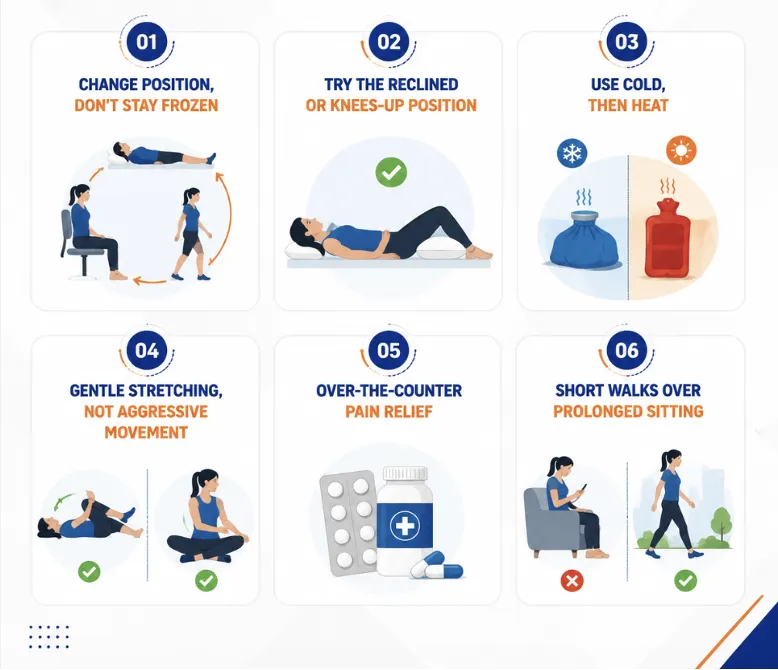
These measures are aimed at the acute phase, easing pain and inflammation while the underlying cause is evaluated and a longer-term plan is put in place.
Change Position, Don’t Stay Frozen:
Lying flat for long periods can stiffen the back and worsen pain. Gentle repositioning, alternating between lying down, short walks, and supported sitting, keeps the nerve from becoming more irritated.
Try the Reclined or Knees-Up Position:
Lying on your back with knees slightly bent and a pillow under them, or reclining at a low angle, reduces pressure on the lower spine and often eases shooting leg pain.
Use Cold, Then Heat:
Cold packs applied for the first day or two help reduce acute inflammation around the nerve. After that, gentle heat can relax tight surrounding muscles and improve comfort.
Gentle Stretching, Not Aggressive Movement:
Simple stretches, such as a gentle knee-to-chest pull or a seated piriformis stretch, can relieve nerve tension, but any stretch that sharply increases leg pain should be stopped immediately.
Over-the-Counter Pain Relief:
Standard anti-inflammatory or pain-relief medication can help manage acute discomfort, but should be used as directed and isn’t a substitute for identifying and treating the underlying cause.
Short Walks Over Prolonged Sitting:
Sitting for long stretches, especially in soft chairs or car seats, tends to aggravate sciatica. Short, frequent walks keep the nerve and surrounding muscles mobile without overloading the spine.
Home measures not cutting it, or pain radiating below the knee? That combination often needs a closer look.
Preventing Sciatica From Coming Back
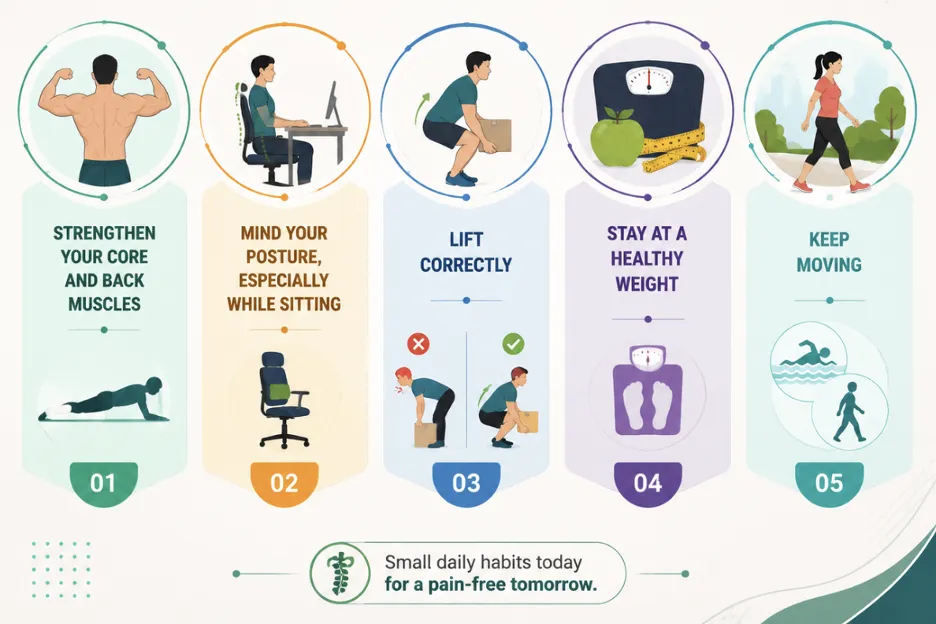
Once the acute pain settles, the focus shifts to keeping it from recurring. Sciatica has a tendency to flare up again if the underlying habits or weaknesses that contributed to it aren’t addressed.
Strengthen Your Core and Back Muscles:
A strong core takes pressure off the spine and reduces strain on the discs and nerve roots. Simple, low-impact exercises like planks, bridges, and supervised physiotherapy routines build this support over time.
Mind Your Posture, Especially While Sitting:
Slouching or sitting for long hours in poor posture increases pressure on the lower spine. Using proper lumbar support and taking short breaks to stand or stretch makes a noticeable difference.
Lift Correctly:
Bending at the waist to lift heavy objects puts direct strain on the lower back. Bending at the knees and keeping the load close to the body protects the spine during everyday lifting.
Stay at a Healthy Weight:
Extra weight, particularly around the midsection, increases the load on the lower spine and can accelerate disc wear. Gradual, sustainable weight management supports long-term spine health.
Keep Moving:
A sedentary lifestyle weakens the muscles that support the spine, while regular low-impact activity, like walking or swimming, keeps the back resilient and the nerve pathways less prone to irritation.
When Immediate Relief Isn't Enough
Most mild to moderate sciatica improves within a few weeks with conservative care, but certain patterns mean it’s time for a proper spine evaluation rather than continuing to manage symptoms at home.
Pain Lasting Beyond 2 to 3 Weeks:
If home measures aren’t reducing the pain, or it keeps returning, imaging and a structured treatment plan are usually needed to identify the exact cause.
Numbness, Tingling, or Weakness:
Progressive numbness or weakness in the leg or foot, especially if it’s getting worse, suggests ongoing nerve compression that needs timely attention.
Pain That Worsens with Coughing or Sneezing:
This pattern often points to disc-related nerve compression and is a useful clue during clinical assessment.
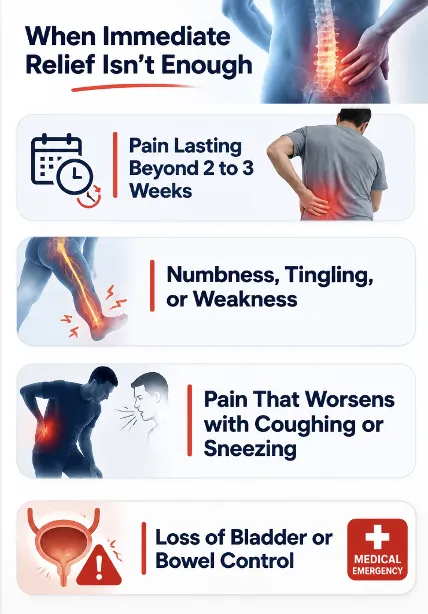
Loss of Bladder or Bowel Control:
This is a medical emergency (cauda equina syndrome) and needs immediate evaluation, not a wait-and-watch approach.
According to the American Association of Neurological Surgeons, most sciatica resolves with conservative treatment within about six weeks, but persistent or worsening symptoms warrant prompt medical evaluation to rule out significant nerve compression.
How Dr. Naveen Tahasildar Treats Sciatica
Dr. Naveen Tahasildar’s approach to sciatica starts with pinpointing the exact source of nerve compression through clinical examination and imaging, rather than treating the leg pain as a standalone problem.
Accurate Diagnosis First: A detailed history combined with MRI helps determine whether the cause is a disc herniation, spinal stenosis, or another structural issue, guiding a precise rather than generic treatment plan.
Conservative Care as the Starting Point: Physiotherapy, activity modification, and medication are used first for the large majority of patients, most cases of sciatica never need surgery.
Image-Guided Injections for Persistent Pain: When conservative measures aren’t enough, targeted epidural or nerve root injections can reduce inflammation around the affected nerve and provide meaningful relief.

Minimally Invasive Surgery for Select Cases: For patients with persistent nerve compression, significant weakness, or cauda equina symptoms, minimally invasive discectomy or decompression relieves pressure on the nerve with a faster recovery than traditional open surgery.
Patients weighing this option can also refer to spine surgery cost in India to understand what’s involved. With over 18 years focused exclusively on spine care and 4,000+ procedures performed across Sparsh Hospitals, Vasanth Nagar and his Sarakki Road clinic, Dr. Tahasildar brings a conservative-first philosophy to sciatica management, reserving surgery for patients who genuinely need it.
“Most people with sciatica are relieved to hear that surgery isn’t usually the first step. The goal is always to find the least invasive path that gets them back to normal function.”
— Dr. Naveen Tahasildar, Spine Surgeon, Bangalore
Ready to get to the root of your sciatica instead of just managing the pain?
FAQs
1. What is the fastest way to relieve sciatica pain at home?
Gentle repositioning, a reclined or knees-up posture, alternating cold and heat, and short walks tend to offer the quickest relief in the acute phase, along with over-the-counter pain relief used as directed.
2. Is walking good or bad for sciatica?
Short, frequent walks are generally helpful, as they keep the nerve and surrounding muscles mobile. Prolonged sitting or complete bed rest tends to make sciatica worse.
3. How long does sciatica pain usually last?
Most cases improve significantly within a few weeks with conservative care. Pain lasting beyond 2 to 3 weeks, or that keeps returning, needs a proper evaluation.
4. When should I see a spine surgeon for sciatica?
See a specialist if pain persists beyond a few weeks, if you notice numbness or weakness in the leg or foot, or immediately if you experience loss of bladder or bowel control.
5. Can sciatica be treated without surgery?
Yes, the majority of sciatica cases are managed successfully with physiotherapy, activity modification, and medication or injections when needed. Surgery is reserved for cases with significant or worsening nerve compression.
References
- American Association of Neurological Surgeons — Sciatica: https://www.aans.org/patients/conditions-treatments/sciatica/
- Cleveland Clinic — Sciatica: https://my.clevelandclinic.org/health/diseases/12792-sciatica
