

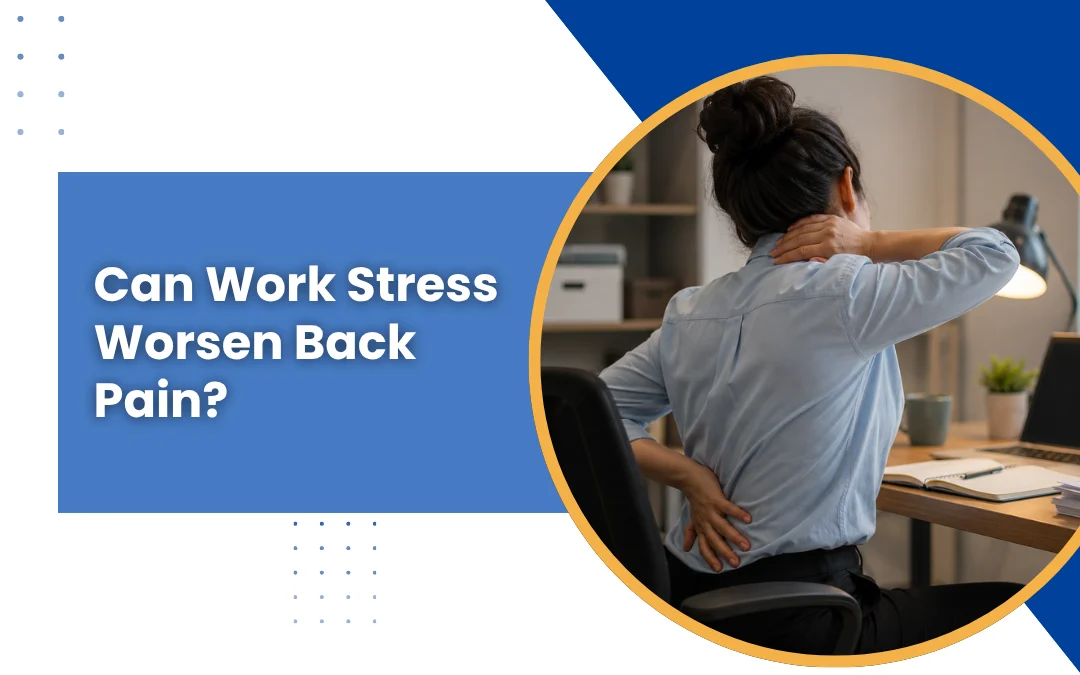
A bad mattress gets blamed a lot, so does long hours at a desk, but work stress often does more damage than either. It tightens muscles without you noticing and slowly builds into pain that has nothing to do with lifting anything heavy. The link between stress and back pain isn’t in your head, it shows up in the muscles.
According to Dr. Naveen Tahasildar, Spine Surgeon in Bangalore, “I get this question a lot, patients want to know if the pain is real or just stress talking. Truth is, it’s both at once. Stress keeps muscles half-clenched all day long, and that alone is enough to cause real pain, particularly lower down the back.”
Can Stress Cause Back Pain Even Without Injury?
Yes, and it happens more than people realize. No fall. No lifting mishap. Nothing to point a finger at.
Muscle tension: Hours of contracted back and shoulder muscles cut down blood flow. Soreness builds up quietly, almost without warning.
Cortisol response: Stress hormones push inflammation levels up in the body. So a minor strain that would’ve settled on its own starts feeling much worse than it actually is.
Posture changes: Under pressure, people hunch forward without even realizing it’s happening. That small shift alone puts uneven weight on the lower spine.
Sleep disruption: Bad sleep means muscles don’t get proper recovery time. The soreness just rolls over into the next day, and the day after that.
None of this shows up on an X-ray, which is exactly why doctors sometimes miss it early on. A proper check through Back Pain Treatment in Bangalore helps sort out what’s mechanical from what’s really just stress.
How Is Stress-Related Back Pain Different From Injury Pain?
At first glance they can feel almost the same. Track it over a few days though, and the pattern tells a different story.
Onset: Injury pain hits right after a specific movement, sharp and sudden. Stress pain sneaks in slowly, usually feeling worse by evening.
Location: Injury pain tends to sit in one exact spot. Stress pain spreads out, across the lower back and into the shoulders.
Pattern: Ever notice how it flares up during a rough week at work, then eases off completely on a holiday? Injury pain doesn’t really work that way.
Response to rest: Injury pain usually needs actual treatment to improve. Stress pain can ease with better sleep and less tension, though it’s still worth getting looked at properly.
Disc-related pain can build up in a similarly gradual way too, so it’s worth a read through How to Heal a Herniated Disc Without Surgery?
Why Choose Dr. Naveen Tahasildar for Back Pain Assessment?
Dr. Naveen Tahasildar has spent over 18 years treating spinal and back pain cases in Bangalore, holding an MBBS and MS in Orthopaedics along with international fellowships in spine care. What sets his assessments apart, he doesn’t stop at the imaging. Lifestyle and stress patterns get factored in too, because more often than not, that’s the actual reason the pain keeps coming back. Every single case gets a full clinical evaluation before any treatment plan is even discussed.
The whole point is finding what’s actually driving the pain, not just treating whatever shows up on a scan. Patients leave with guidance built around their own triggers, not some generic handout. That’s usually where lasting relief actually comes from. Call +91 7676090119 to book your consultation.
Struggling with unexplained back pain?
FAQs
Can stress cause lower back pain specifically?
Yes, stress commonly tightens lower back muscles, causing persistent dull pain.
Does stress-related back pain go away on its own?
It can ease with reduced stress, though evaluation is still advised.
How long does stress take to cause back pain?
Chronic stress over weeks to months typically triggers noticeable back pain.
Should I see a doctor for stress-linked back pain?
Yes, especially if pain persists beyond two to three weeks.
Disclaimer
This blog is for educational purposes only. If back pain persists alongside high stress periods or worsens over time, consult a spine specialist for a proper physical evaluation.
