
Slipped Disc Treatment in Bangalore
If you’ve ever dealt with back pain, you know how much it can throw off your day-to-day life, work, moving around, even just relaxing. When the pain is originating from a slipped disc, finding the right kind of treatment really matters.
Dr. Naveen Tahasildar, experienced spine surgeon for slipped disc treatment in Bangalore, leads the way with evidence-based treatments that aim to relieve pressure, get you moving again, and help you avoid any long-term trouble.
What is a slipped disc?
A slipped disc, sometimes called a herniated or prolapsed disc—happens when the soft, jelly-like center of a spinal disc pushes through a crack in its tougher outer layer. When that happens, it can press on nearby nerves and cause pain, weakness, or weird tingling in your back, neck, or limbs.
Think of each disc as a little cushion between your vertebrae, soaking up shocks and letting you move comfortably. If one of those slips or ruptures, you lose some of that cushioning, and, this is where you start experiencing sharp pain.
Some typical symptoms:
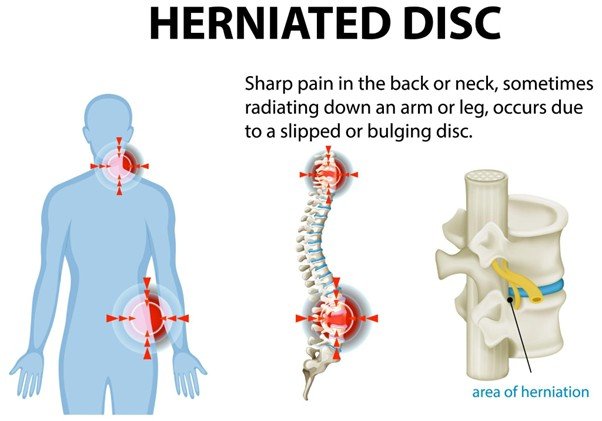
Ongoing back or neck pain
Pain shooting down your arms or legs
Tingling or numbness in your fingers or toes
Muscle weakness or less flexibility than usual
Affected Area | Possible Symptoms |
Lower back | Pain running down the leg (sciatica), stiffness |
Neck | Shoulder or arm pain, numbness in the hands |
Upper back | Localized discomfort, can’t move as freely |
There are a few things that can make a slipped disc more likely—bad posture, getting older, not moving much, or lifting heavy stuff the wrong way. A lot of people don’t get injured during a major excercise or activity ; it creeps up over time due to repeated strain.
If we diagnose it early and start the right treatment, we can reduce inflammation, take pressure off your nerves, and get you moving like normal again. Spotting the signs early on is key to planning gentle, non-invasive treatments that keep your spine healthy for the long run.
If you are experiencing similar symptoms, book a consultation with Dr. Naveen Tahasildar Today.
What Are the Common Risk Factors & Causes of Slipped Disc?
The main reason is usually age-related disc degeneration. As we get older, spinal discs dry out and lose flexibility, so they’re easier to tear. Bad posture and doing the same bending or lifting motions over and over adds up to the stress, and eventually it tears/starts leaking.
Of course, sometimes it’s a sudden thing—a fall, a sports injury, maybe a car accident. Some people are just more prone because of their genes. And carrying extra weight really piles on the pressure, especially in your lower back.
Smoking/tobacco consumption is also a major factor; it slows blood flow to the spine, so your discs do not receive the nutrients they need and get weaker over time. If your job involves heavy lifting, sitting all day, or being exposed to constant vibration (think construction or driving), that can increase your risk too.
Here’s a quick look at what can play a role:
Category | Examples / Contributors |
Degenerative changes | Aging, discs drying out |
Lifestyle & posture | Slouching, bad ergonomics, repetitive movements |
Physical trauma | Accidents, sports injuries |
Medical conditions | Spinal stenosis, spinal tumors, chronic inflammation |
Lifestyle habits | Smoking, being overweight, not staying active |
Genetic predisposition | Family history of weak discs |
Knowing what puts you at risk is the first step towards the right treatment. Book a consultation today to get started.
Diagnosis of Slipped Disc
Diagnosis always starts with a thorough physical exam—we check the source of your pain, test your muscle strength, reflexes, and see how much you can move. This helps us figure out if nerves are involved and which areas are under pressure.
If your symptoms persist or don’t quite fit the usual pattern, we’ll use advanced imaging like:
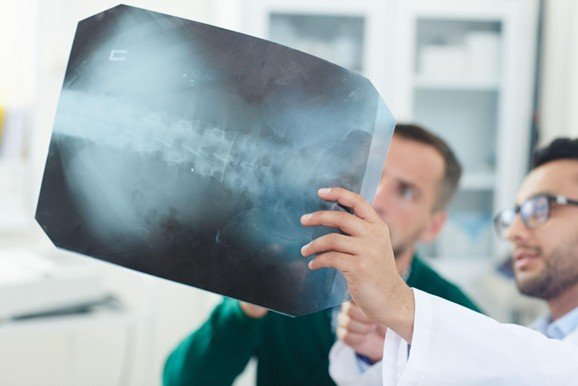
Diagnostic Test | Purpose | Common Findings |
MRI Scan | Shows soft tissues in detail | Spots herniated discs and nerve compression |
CT Scan | Gives cross-sectional images | Shows disc shape and bone changes |
X-ray | Checks for fractures or misalignment | Assesses spinal structure |
Nerve Conduction Study (NCS) | Tests how well nerves send signals | Helps confirm nerve irritation or damage |
All this lets us see whether the disc is bulging, fully out, or even broken off—pretty important for deciding what to do next.
We also spend time discussing about your medical history—old injuries, what you do for work, how active you are. That helps us match up what we see on scans with what you’re actually feeling.
Our whole approach is about getting the diagnosis right before starting any treatment.
Slipped Disc Treatment – What Are the Options?
We always look at how severe your slipped disc is before talking about treatment. If it’s mild, then most people will do really well with non-surgical options that help ease nerve pressure and let your body heal up naturally.
Non-surgical treatments might include physical therapy, fixing your posture, spinal decompression, and exercises tailored to you. The goal is to reduce swelling, manage pain, and bring back your flexibility. Sometimes, short-term meds for pain or muscle spasms make sense too.
For people who need more attention to their condition, physiotherapy is the go to option. Things like heat therapy, ultrasound, and specific stretches can really help strengthen your back and core. Dr. Naveen also recommends lifestyle tweaks—better ergonomics at work, losing a bit of weight if needed.
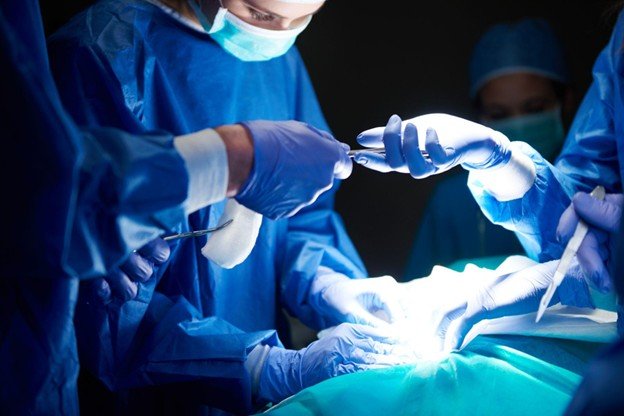
If conservative treatment options aren’t working, we might look at minimally invasive surgery. The go-to option for tougher cases is usually a microdiscectomy, where we remove just the bit of disc pressing on your nerve. It’s precise, and it keeps your spine stable. These surgical options often increase the treatment costs, for better transparency, get better idea about the spine surgery costs that we have provided.
Another effective method recommended by Dr. Naveen Tahasildar is targeted nerve injections, which involve administering anti-inflammatory or pain-relief medication directly into the affected area, often providing immediate relief from nerve pain.
Additionally, targeted nerve injections can help reduce inflammation, promoting faster healing and improving overall mobility.
Treatment Method | Approach | Common Aim |
Physiotherapy | Exercises, posture training | Strengthen the spine, cut down pain |
Medication | Anti-inflammatory or pain meds | Reduce inflammation |
Targetted Nerve Injection | Deliver anti-inflammatory and/or pain medication directly to the nerve root | Reduce inflammation and pain around the affected nerve) |
Microdiscectomy | Surgically remove disc fragment | Relieve nerve pressure |
Getting diagnosed early and starting the right treatment is crucial. Do not hesitate to book a consultation today.
Why Choose Dr. Naveen Tahasildar?

Dr. Naveen Tahasildar is a highly experienced spine surgeon in Bangalore with over 17 years of expertise in spine care and orthopaedics. He is recognized for his commitment to evidence-based, minimally invasive techniques, which he integrates into personalized treatment plans for each patient.
Dr. Tahasildar has received advanced training and gained professional experience at leading centers in India, Hong Kong, Denmark, and Australia. This extensive international exposure has enhanced his proficiency in managing complex spinal conditions such as spinal deformities, disc prolapse, and degenerative spine disorders. His application of advanced surgical methods facilitates faster recovery and improved patient outcomes.
In addition to his clinical practice, Dr. Tahasildar is actively involved in research and education. He has contributed numerous peer-reviewed publications to the field of spine surgery and continuously updates his knowledge to incorporate the latest advancements in surgical techniques. This dedication ensures that his patients benefit from cutting-edge, evidence-based care.
Qualification | Institution / Fellowship | Focus Area |
MBBS, MS (Orthopaedics) | PGIMER, Chandigarh | Orthopaedic Surgery |
AO Spine Fellowship | Amrita Institute, Kochi | Scoliosis & Deformity |
SICOT Travelling Fellowship | Aarhus University, Denmark | Complex Spine Disorders |
Consultant Spine Surgeon | SPARSH Hospital, Bangalore | Spine Deformity & Disc Surgery |
Book a consultation with Dr. Naveen Tahasildar today to explain your issues and get the right treatment for your spine.
Patient Reviews
Still have doubts lingering in your mind? Let’s clear them up with some common questions.
FAQs
What is the best treatment for a slipped disc?
Treatment options include physical therapy, pain medications, steroid injections, and in severe cases, minimally invasive or open surgery.
How long does it take to recover from a slipped disc?
Recovery typically ranges from a few weeks to several months, depending on severity and treatment type.
Can a slipped disc heal on its own?
Yes, many slipped discs improve with conservative treatments like rest, physical therapy, and medication.
When is surgery necessary for a slipped disc?
Surgery is recommended if there is severe pain, neurological symptoms, or if conservative treatments fail after 6 weeks.
Can lifestyle changes help prevent slipped disc recurrence?
Yes, maintaining good posture, regular exercise, proper lifting techniques, and a healthy weight can reduce the risk of recurrence.