

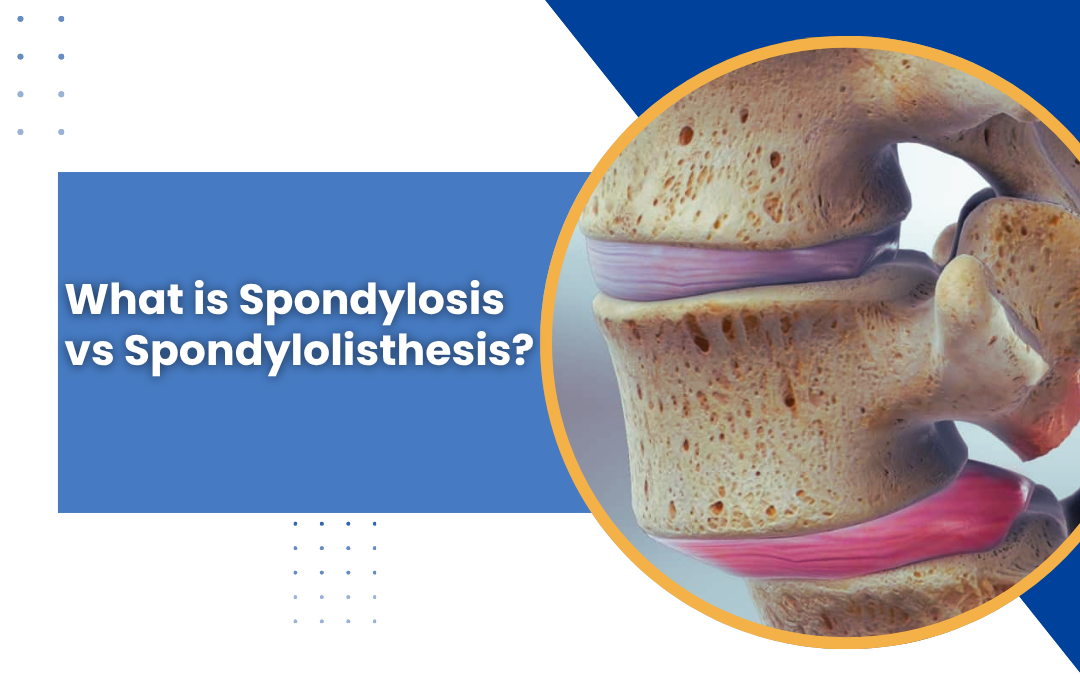
Spondylosis is the age-related degeneration (arthritis) of the spine that causes bone spurs and stiffness. Spondylolisthesis is different. It’s the instability that shows up when one vertebra slips forward over another, often after a small fracture or severe disc wear. One is wear and tear. The other is displacement.
According to Dr. Naveen Tahasildar, an experienced Spine surgeon in Bangalore, “spondylosis is degenerative wear. Spondylolisthesis is a mechanical slip. People mix them up all the time, and that mistake delays the right treatment by months.”
How Are Spondylosis and Spondylolisthesis Different in Cause and Mechanism?
On an MRI, the two can look similar at first glance. But the cause is not the same. And the fix is not the same either.
| Feature | Spondylosis | Spondylolisthesis |
| What it is | Age-driven wear of discs, joints, and ligaments | A vertebra slips forward over the one below |
| Main cause | Discs dry up and thin out, bone spurs form | Small fracture, joint defect, or weak disc underneath |
| Typical age | Mostly after 40 | Any age, often after injury or in mid-life |
| Onset | Slow, builds across decades | Can hit suddenly after a fall or heavy lift |
| On X-ray | Narrowed disc spaces, bone spurs | A clear step on the side view, worse when bending |
| Severity | Mild to severe by wear level | Graded 1 to 4 by how much the bone has slipped |
| Symptom feel | Stiffness, dull ache, less flexibility | Sharp pain, leg pain, sometimes a step you can feel |
| If ignored | Spurs may pinch nerves over time | Slip can worsen and crush nerve roots |
Left alone, both can narrow the spinal canal over time and push patients into spinal stenosis. That’s when leg pain on walking, calf cramping, or trouble standing for long stretches starts showing up. Catching it early genuinely changes the road ahead.
The spinal cord does not heal the way other tissues do. Once compression causes damage to the cord, recovery of lost function is not guaranteed even after treatment. This is why understanding its progression matters.
When Should You Worry About These Spine Conditions?
Some stiffness with age, fine. Most of us deal with it. But there’s a line where things stop being normal, and waiting becomes risky.
- Radiating pain: When the pain shoots into your arm or leg with tingling, that’s a nerve, not a muscle. Time for imaging.
- Weakness: Foot drag while walking, slippers that keep falling off, hands dropping a cup. Same pattern shows up in weak spine muscles cases too. Don’t ignore these.
- Bladder trouble: Sudden problems holding urine, or numbness in the saddle area. Rare, but go in the same day. Not next week.
- Pain at night: Back or neck pain that wakes you up and won’t settle even with rest needs a scan, especially if you’re losing weight.
If two or more of these match what you’re going through, please don’t sit on it. Read our guide on signs to consult a spine specialist.
Why Choose Naveen Spine for Spondylosis and Spondylolisthesis Care?
Dr. Naveen Tahasildar has spent 18+ years on the spine alone. Over 4,000 surgeries, plenty of complex slip and degenerative cases included. He trained abroad in deformity correction and minimally invasive work, and his first instinct is rarely the operating room.
Most people who walk in are confused about what they actually have. A proper MRI read, a hands-on exam, and a clear recovery plan, that’s how you skip surgery you didn’t need. Patients who stick to the plan usually feel real relief in four to six weeks. The ones who do need surgery, mostly minimally invasive cases, are back to office work within six to eight weeks.
Noticing Bone stiffness and spurs These could be early signs of Spondylosis Or Spondylolisthesis. Early consultation with an experienced spine surgeon can help confirm the diagnosis and prevent further spinal cord damage.
FAQs
Can spondylosis turn into spondylolisthesis over time?
Yes, long-term wear can weaken vertebrae and trigger a slip later in life.
Is spondylolisthesis more serious than spondylosis?
Depends on the slip grade and whether nerves are getting squeezed enough to cause weakness.
Do both conditions always need surgery?
No, most patients get better with physiotherapy, posture work, and short medication courses.
Can you exercise with spondylolisthesis?
Yes, but only low-impact core moves your spine doctor has cleared.
