

Cervical myelopathy is a condition where the spinal cord in the neck gets compressed, gradually affecting movement, balance, and hand function. Many patients live with it for years without realising what is causing their symptoms until the damage becomes significant.
Dr. Naveen Tahasildar, a trusted spine surgeon in Bangalore, explains that cervical myelopathy does not shorten life expectancy on its own but leaving it untreated can lead to permanent nerve damage that severely affects quality of life.
“Most patients with cervical myelopathy can live a full life if the condition is caught and treated at the right time. The danger is not how long you live, it is how much function you lose while waiting.”
What Is Cervical Myelopathy and Why Does It Progress?
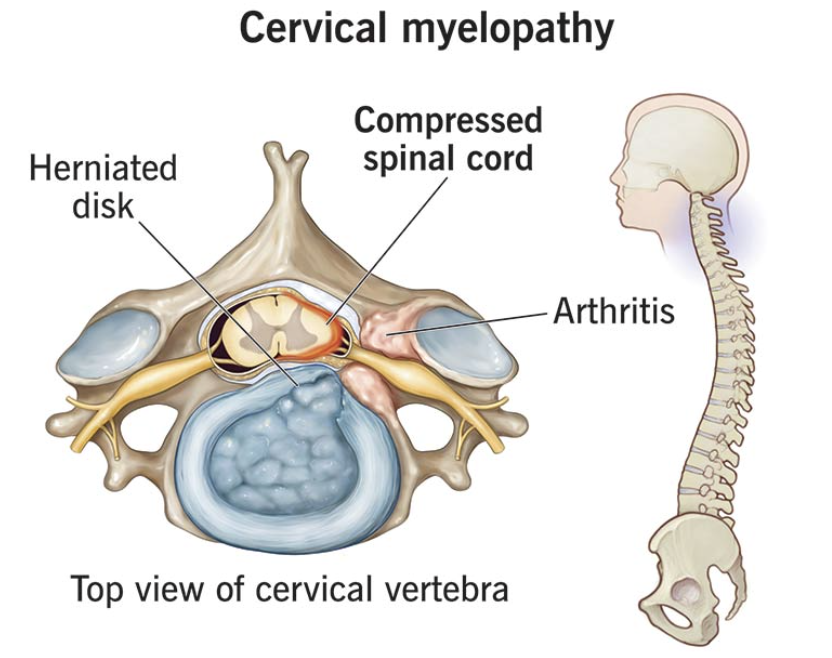
Cervical myelopathy occurs when the spinal cord in the neck is compressed due to degenerative changes, disc herniation, or bone spurs narrowing the spinal canal. Unlike a sudden injury, this condition develops slowly often over months or years making it easy to dismiss early warning signs.

The spinal cord does not heal the way other tissues do. Once compression causes damage to the cord, recovery of lost function is not guaranteed even after treatment. This is why understanding its progression matters.
What Is Cervical Myelopathy and Why Does It Progress?
Progression varies from person to person. Some patients remain stable for years with minimal symptoms. Others deteriorate rapidly over months. Studies show that approximately 20 to 60 percent of patients experience worsening without treatment. There is no reliable way to predict who will progress quickly, which makes early evaluation essential.
Factors That Influence Progression
Severity of spinal cord compression at the time of diagnosis
Age — older patients tend to progress faster
Presence of other conditions such as arthritis or degenerative disc disease
Canal diameter — a naturally narrow spinal canal increases risk
Delayed diagnosis and treatment
Symptoms That Tell You the Condition Is Getting Worse
Many patients with cervical myelopathy initially notice subtle changes that are easy to attribute to ageing or tiredness. Recognising the pattern early is critical.
Common symptoms include:
Weakness or clumsiness in the hands, dropping objects, difficulty buttoning clothes
Unsteady gait or difficulty balancing while walking
Numbness or tingling in the arms, hands, or fingers
Neck pain or stiffness, sometimes with headaches
In advanced cases, difficulty with bladder or bowel control
If you are experiencing hand weakness, balance problems, or increasing numbness in your arms, do not wait. Get a spine evaluation before the damage becomes irreversible.
How Is Cervical Myelopathy Diagnosed?
Because symptoms often develop gradually and overlap with other conditions, diagnosis requires a structured clinical and imaging-based approach.
Clinical Examination
A spine specialist assesses hand grip strength, reflexes, balance, and coordination. Specific neurological tests such as Hoffman’s sign and Lhermitte’s sign help identify spinal cord involvement and determine the severity of compression.
MRI of the Cervical Spine
MRI is the gold standard investigation. It visualises the degree of cord compression, any signal changes within the cord indicating damage, and the specific levels involved all of which directly guide treatment decisions.
Concerned That Your Neck Symptoms May Be Something More Serious? Cervical myelopathy requires careful evaluation and timely imaging to assess the extent of spinal cord involvement. Consult Dr. Naveen Tahasildar to get a thorough diagnosis and understand the right treatment approach for your condition.
Treatment Options for Cervical Myelopathy
Dr. Naveen Tahasildar advises that treatment must always be matched to the stage and severity of the condition. No two patients are the same, and the treatment plan must reflect individual imaging findings and functional status.
Conservative management
Physiotherapy, activity modification, and cervical collar support for mild, stable cases under close monitoring
Medications
Anti-inflammatory drugs and nerve support supplements to manage symptoms in the early phase
Surgery — Cervical Decompression
When compression is significant or symptoms are progressing, surgical decompression is recommended to relieve pressure on the spinal cord and halt further deterioration
Minimally Invasive Spine Surgery
Advanced techniques that decompress the cord through smaller incisions, significantly reducing recovery time, blood loss, and post-operative pain
Surgery does not reverse damage already done but it stops further deterioration and, in many patients, allows meaningful functional recovery when performed at the right time.
Recovery and Life After Treatment
Recovery after cervical myelopathy surgery depends on how much cord damage had already occurred before the procedure. Patients operated on early before significant cord signal changes appear on MRI, generally recover much better than those who delayed intervention.
Post-surgery rehabilitation including physiotherapy plays an important role in restoring hand function, balance, and strength. Most patients experience stabilisation of symptoms, and many regain function they had partially lost. Regular neurological follow-up after surgery ensures that recovery is progressing and that no new changes develop over time.
According to spine care guidelines from the American Association of Neurological Surgeons, early surgical intervention in progressive cervical myelopathy leads to significantly better long-term outcomes compared to prolonged conservative management.
When Should You See a Spine Surgeon for Cervical Myelopathy?
Most patients initially visit a general physician or neurologist, which is appropriate. However, once imaging confirms spinal cord compression or symptoms are clearly worsening, a spine surgeon’s evaluation becomes essential.
Patients should consider seeing a spine surgeon when:
Hand clumsiness or grip weakness is affecting daily tasks
Walking has become unsteady or unsafe without support
MRI shows cord compression with or without signal changes
Symptoms are progressing despite conservative treatment
Bladder or bowel symptoms have appeared alongside neck and arm symptoms
Dr. Naveen Tahasildar, Spine Surgeon in Bangalore, emphasises that timing is everything in cervical myelopathy.
“The spinal cord has a limited tolerance for compression over time. When we intervene early, we protect what the patient still has. When we wait too long, we are left trying to recover what has already been lost and that is a much harder challenge.”
Living With Neck Pain, Hand Weakness, or Balance Problems? If cervical myelopathy symptoms are affecting your daily life, do not delay seeking a specialist opinion. Consulting an experienced spine surgeon can help determine the precise stage of your condition and guide you toward the most effective treatment plan before permanent damage occurs.
FAQs
Can cervical myelopathy be cured completely?
It cannot always be fully reversed, but surgery can halt progression and restore significant function especially when performed before severe cord damage occurs.
Is cervical myelopathy a life-threatening condition?
It is not directly life-threatening, but in severe untreated cases, loss of bladder or bowel control and paralysis can seriously impact quality of life and independence.
How do I know if my cervical myelopathy is getting worse?
Increasing hand weakness, worsening balance, new bladder symptoms, or growing numbness in the arms are signs the condition is progressing and require immediate specialist evaluation.
Can physiotherapy alone treat cervical myelopathy?
Physiotherapy can help manage mild symptoms but cannot reverse spinal cord compression. Moderate to severe cases require surgical evaluation by a spine specialist.
What happens if cervical myelopathy is left untreated?
Without treatment, the spinal cord continues to sustain damage leading to progressive loss of hand function, walking difficulty, and in advanced cases, partial paralysis.
References —
- NCBI — Natural History and Management of Cervical Myelopathy:https://www.ncbi.nlm.nih.gov/pmc/articles/PMC4300530/